
The hidden electrical dangers of older swimming pools in Northridge — and how to fix them
Swimming pools offer a perfect way to beat the Southern California heat but older pools in Northridge can hide serious electrical dangers that most homeowners never see. Faulty wiring, outdated grounding systems and corroded fixtures can turn your backyard oasis into a shock hazard. Understanding these risks and knowing how to fix them keeps your family safe and your pool in compliance with Los Angeles building codes. Los Angeles Department of Building and Safety.
Why older Northridge pools face unique electrical risks
Northridge neighborhoods built in the 1960s and 1970s often feature mid-century pool designs with original electrical systems still in place. The local soil composition combined with decades of seismic activity can loosen connections and crack conduit. Salt air from coastal breezes accelerates corrosion on metal fixtures and junction boxes. These factors create a perfect storm for electrical failures that can energize pool water without warning. NEC Article 680 pool wiring requirements.
Common hidden dangers in older pool electrical systems
Many older pools still use lighting fixtures that lack proper bonding or GFCI protection. Underwater lights can develop hairline cracks in their seals allowing water to reach live wires. Junction boxes placed too close to the water’s edge can flood during heavy rains. Pool pump motors with degraded insulation can leak current into the bonding grid. Even deck lighting installed without proper grounding can create stray voltage that travels through wet concrete.. Read more about How to professionally light the specimen trees in your Hancock Park backyard without messy wires.
Electric shock drowning poses one of the greatest risks. When faulty wiring energizes the water swimmers can lose muscle control within seconds. Children are especially vulnerable because they often swim near lights or metal ladders where voltage gradients are strongest.
NEC Article 680 and Los Angeles pool code requirements
The National Electrical Code Article 680 sets strict standards for pool wiring but California adds even tougher requirements. Los Angeles Department of Building and Safety inspectors look for specific compliance items including proper equipotential bonding grids, GFCI protection on all circuits, and specific distances between electrical equipment and water. Junction boxes must sit at least 4 inches above the deck and remain accessible without tools. Underwater luminaires require approved wet-niche fixtures with double insulation. Safely Wiring Your New Pool or Hot Tub in Encino.
Los Angeles building permits are mandatory for any electrical work on pools. Inspectors verify that all metal within 5 feet of the water’s edge connects to the bonding grid. This includes handrails, ladders, diving boards and even nearby metal patio furniture. Without this equipotential bonding voltage differences cannot equalize creating shock hazards. Electrical Inglewood.
Essential safety features every pool must have
Ground Fault Circuit Interrupters act as the first line of defense. GFCIs monitor current flow and shut off power in milliseconds when they detect a ground fault. All pool circuits including pumps, lights and heaters need GFCI protection. These devices wear out over time so testing them monthly ensures they work when needed.
Equipotential bonding creates an electrical grid connecting all metal components. This grid prevents voltage differences that can cause shocks. A proper bonding system uses heavy copper wire connected to the pump, heater, metal conduit and any nearby metal structures. The grid must extend at least 3 feet beyond the pool edge.
Proper grounding provides a safe path for fault current. The grounding system connects to the main electrical panel and earth through grounding rods. Without adequate grounding GFCIs cannot detect faults and power may remain on even when current leaks into the water.
Warning signs your pool wiring needs immediate attention
Flickering underwater lights often indicate failing seals or corroded connections. A tingling sensation when touching metal pool rails or ladders signals stray voltage. Circuit breakers that trip frequently suggest overloaded or failing equipment. Rust or corrosion on junction boxes and conduit fittings points to moisture intrusion. Buzzing sounds from the pump or light transformers can mean failing insulation or loose connections.
Older pools may lack visible signs of trouble until a dangerous fault occurs. Annual inspections by a licensed C-10 electrician can catch problems before they become hazards. Professional testing includes checking bonding continuity, verifying GFCI operation and measuring stray voltage levels.
Annual pool electrical safety inspection checklist
- Test all GFCI outlets and circuit breakers for proper operation
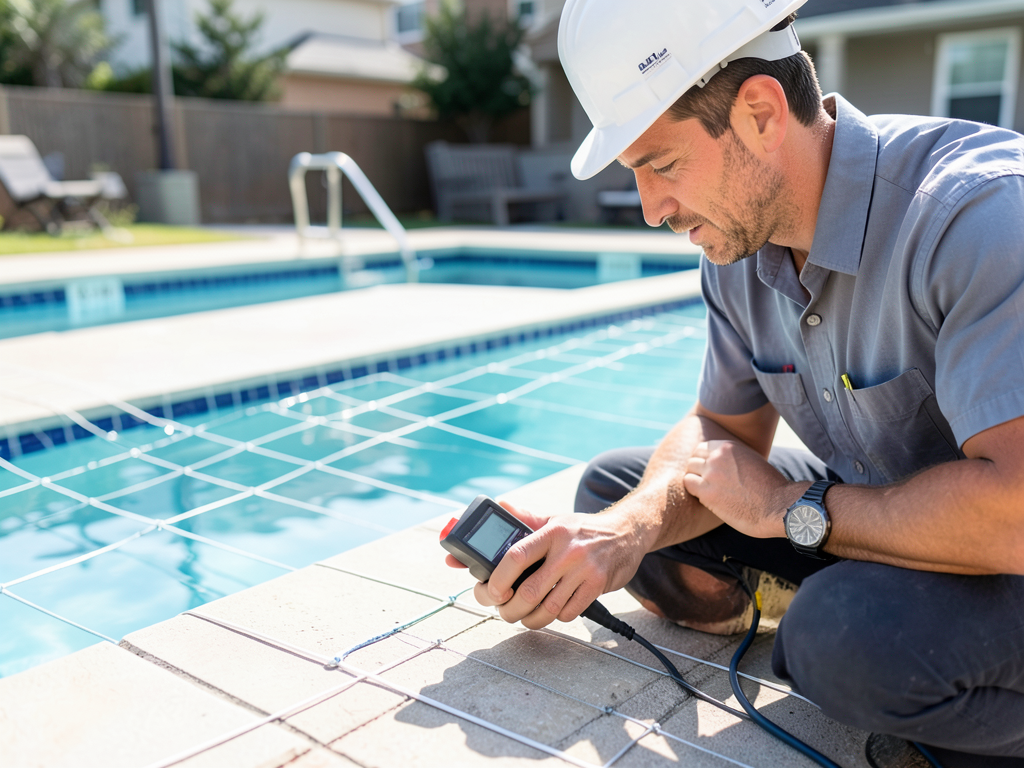
- Verify equipotential bonding continuity with a meter
- Inspect underwater light fixtures for cracks or seal degradation
- Check junction boxes for water intrusion and secure covers
- Test pump motor insulation resistance
- Measure stray voltage in the water and on deck surfaces
- Confirm all metal within 5 feet of water bonds to the grid
- Verify proper clearances between electrical equipment and water
Cost factors for pool electrical repairs and upgrades
Repair costs vary based on the extent of work needed. Replacing a single underwater light fixture runs between $400 and $800 including labor and materials. Installing a complete bonding system for an older pool typically costs $1,200 to $2,500 depending on the pool size and accessibility. Upgrading all circuits to GFCI protection ranges from $600 to $1,500. A full electrical safety overhaul including new wiring, bonding and GFCI protection can cost $3,000 to $6,000 but provides peace of mind and ensures code compliance. Installing a backup generator for your Hollywood Hills home before the next outage.
Emergency repairs after a shock incident cost significantly more due to urgent service calls and potential water damage to electrical components. Preventative maintenance costs far less than emergency repairs and protects against liability if someone gets injured. Finding an Emergency Electrician in Silver Lake Who Actually Answers the Phone.
Why hire a licensed Los Angeles electrician for pool work
Pool electrical work requires specialized knowledge of Article 680 requirements and Los Angeles building codes. Licensed C-10 electricians understand equipotential bonding grid design, proper GFCI installation and LADBS permit procedures. They carry insurance that protects homeowners from liability and use proper testing equipment to verify safety. Electrical Compton.
DIY electrical work on pools is dangerous and illegal in Los Angeles. Even seemingly simple tasks like replacing a light fixture can create shock hazards if done incorrectly. Professional electricians provide warranties on their work and ensure all installations pass inspection.
Steps to take if you suspect electrical problems
Stop using the pool immediately if you notice any warning signs. Keep everyone out of the water and away from metal components. Turn off power to the pool at the main breaker if you can do so safely. Call a licensed electrician who specializes in pool systems. Do not attempt to troubleshoot or repair electrical problems yourself.
Document any symptoms like flickering lights, buzzing sounds or tingling sensations to help the electrician diagnose the problem quickly. If someone experiences a shock seek medical attention even if they feel fine. Electric shock effects can be delayed.
Protecting your investment and your family
Older pools in Northridge represent significant home value but outdated electrical systems create liability risks. Insurance companies may deny claims for electrical incidents if the pool lacks proper safety features. Home inspectors flag electrical code violations during sales causing delays and costly repairs.
Modern pool electrical systems incorporate redundant safety features. Multiple GFCI devices protect different circuits. Bonding grids use oversized conductors for added safety. Weatherproof enclosures prevent moisture intrusion. These upgrades cost money upfront but prevent accidents and expensive emergency repairs.
Spring is the perfect time to schedule pool electrical inspections before summer swimming season begins. Local electricians in Northridge understand the specific challenges of retrofitting older pools and can recommend cost-effective safety upgrades. They can also handle LADBS permit requirements and coordinate with pool contractors if additional work is needed.
Don’t wait for a dangerous incident to reveal your pool’s electrical problems. A professional inspection today can prevent tragedy tomorrow. Your family’s safety is worth the investment in proper pool electrical systems.
Frequently Asked Questions
How often should I test my pool’s GFCI outlets?
Test GFCI outlets monthly by pressing the test button and verifying power shuts off. Replace GFCIs every 10 years as they degrade over time. Professional testing during annual inspections provides additional verification.
What does equipotential bonding actually do?
Equipotential bonding connects all metal components to the same electrical potential preventing voltage differences that cause shocks. It creates a safe path for fault current and ensures all metal parts remain at equal voltage even if a fault occurs.
Can I upgrade my pool lighting to LED fixtures?
Yes LED fixtures offer energy savings and cooler operation but must be approved for wet-niche use. Professional installation ensures proper sealing and bonding. LED upgrades often pay for themselves through reduced electricity costs.
How do I know if my pool needs a bonding system upgrade?
Pools built before 2008 likely need bonding upgrades to meet current code. Signs include missing bonding wires, corroded connections or lack of GFCI protection. A professional inspection can verify if your system meets current requirements.
What should I do if someone feels a shock in the pool?
Immediately evacuate everyone from the water. Turn off power if possible. Do not touch anyone in the water. Call 911 for medical assistance. Have a licensed electrician inspect the system before allowing pool use again.
Ready to make your Northridge pool safe? Call Elite Electricians Los Angeles today at (213) 277-8815 for a comprehensive pool electrical safety inspection. Our licensed C-10 electricians understand Northridge’s unique challenges and can ensure your pool meets all Los Angeles safety codes.
You may also find this helpful. Troubleshooting a pool pump that keeps shutting off in your West Hills backyard.
{
“@context”: “https://schema.org”,
“@type”: “BlogPosting”,
“headline”: “The hidden electrical dangers of older swimming pools in Northridge — and how to fix them”,
“description”: “Discover the hidden electrical hazards in older Northridge swimming pools and learn how to fix them. Protect your family with expert safety tips and local electrical code compliance.”,
“wordCount”: 1574,
“datePublished”: “2026-05-29T10:59:00.000Z”,
“dateModified”: “2026-05-29T10:59:00.000Z”,
“inLanguage”: “en-US”,
“mainEntityOfPage”: {
“@type”: “WebPage”,
“@id”: “https://eliteelectricianslosangeles.com”
},
“publisher”: {
“@type”: “LocalBusiness”,
“name”: “Elite Electricians Los Angeles”,
“url”: “https://eliteelectricianslosangeles.com”
},
“author”: {
“@type”: “Organization”,
“name”: “Elite Electricians Los Angeles”,
“url”: “https://eliteelectricianslosangeles.com”
},
“image”: {
“@type”: “ImageObject”,
“url”: “https://eliteelectricianslosangeles.com/wp-content/uploads/2026/03/the-hidden-electrical-dangers-of-older-swimming-po-1.png”
}
}
{
“@context”: “https://schema.org”,
“@type”: “Electrician”,
“name”: “Elite Electricians Los Angeles”,
“url”: “https://eliteelectricianslosangeles.com”,
“address”: {
“@type”: “PostalAddress”,
“addressLocality”: “Los Angeles”
},
“areaServed”: {
“@type”: “City”,
“name”: “Los Angeles”
}
}
{
“@context”: “https://schema.org”,
“@type”: “FAQPage”,
“mainEntity”: [
{
“@type”: “Question”,
“name”: “How often should I test my pool’s GFCI outlets?”,
“acceptedAnswer”: {
“@type”: “Answer”,
“text”: “Test GFCI outlets monthly by pressing the test button and verifying power shuts off. Replace GFCIs every 10 years as they degrade over time. Professional testing during annual inspections provides additional verification.”
}
},
{
“@type”: “Question”,
“name”: “What does equipotential bonding actually do?”,
“acceptedAnswer”: {
“@type”: “Answer”,
“text”: “Equipotential bonding connects all metal components to the same electrical potential preventing voltage differences that cause shocks. It creates a safe path for fault current and ensures all metal parts remain at equal voltage even if a fault occurs.”
}
},
{
“@type”: “Question”,
“name”: “Can I upgrade my pool lighting to LED fixtures?”,
“acceptedAnswer”: {
“@type”: “Answer”,
“text”: “Yes LED fixtures offer energy savings and cooler operation but must be approved for wet-niche use. Professional installation ensures proper sealing and bonding. LED upgrades often pay for themselves through reduced electricity costs.”
}
},
{
“@type”: “Question”,
“name”: “How do I know if my pool needs a bonding system upgrade?”,
“acceptedAnswer”: {
“@type”: “Answer”,
“text”: “Pools built before 2008 likely need bonding upgrades to meet current code. Signs include missing bonding wires, corroded connections or lack of GFCI protection. A professional inspection can verify if your system meets current requirements.”
}
},
{
“@type”: “Question”,
“name”: “What should I do if someone feels a shock in the pool?”,
“acceptedAnswer”: {
“@type”: “Answer”,
“text”: “Immediately evacuate everyone from the water. Turn off power if possible. Do not touch anyone in the water. Call 911 for medical assistance. Have a licensed electrician inspect the system before allowing pool use again.”
}
}
]
}
{
“@context”: “https://schema.org”,
“@type”: “BreadcrumbList”,
“itemListElement”: [
{
“@type”: “ListItem”,
“position”: 1,
“name”: “Home”,
“item”: “https://eliteelectricianslosangeles.com”
},
{
“@type”: “ListItem”,
“position”: 2,
“name”: “Blog”,
“item”: “https://eliteelectricianslosangeles.com/blog”
},
{
“@type”: “ListItem”,
“position”: 3,
“name”: “The hidden electrical dangers of older swimming pools in Northridge — and how to fix them”
}
]
}
{
“@context”: “https://schema.org”,
“@type”: “Service”,
“serviceType”: “Electricians”,
“provider”: {
“@type”: “LocalBusiness”,
“name”: “Elite Electricians Los Angeles”,
“url”: “https://eliteelectricianslosangeles.com”
},
“areaServed”: {
“@type”: “City”,
“name”: “Los Angeles”
},
“description”: “Discover the hidden electrical hazards in older Northridge swimming pools and learn how to fix them. Protect your family with expert safety tips and local electrical code compliance.”
}