




Menu

Motor Control Services in Los Angeles – Industrial-Grade Solutions That Keep Your Operations Running

Elite Electricians Los Angeles delivers precision motor control system integration, electric motor control repair, and motor control center services engineered to minimize downtime and maximize operational efficiency for manufacturing, warehousing, and commercial facilities across the greater Los Angeles metro.

Slider Image 1
Slider Image 2
Slider Image 3
Slider Image 4
Slider Image 5
Slider Image 7
Slider Image 8
Slider Image 9
Slider Image 10
Slider Image 11

When Motor Control Failures Threaten Your Bottom Line

A motor control failure in a Los Angeles manufacturing plant or distribution center does not just stop one machine. It halts production lines, delays shipments, and costs thousands of dollars per hour in lost revenue. In a region where logistics and manufacturing drive the economy, facilities in Vernon, Commerce, and the Port of Los Angeles corridor depend on continuous motor operation.

Los Angeles's electrical infrastructure faces unique stress. Summer heat loads push motors harder. Voltage fluctuations from grid demand spikes during peak hours create transient conditions that damage sensitive control circuitry. Coastal facilities near San Pedro and Long Beach deal with salt air corrosion that accelerates contact degradation in motor control panels. Older industrial buildings in the Arts District and Downtown still run outdated motor control centers that lack modern protective features.

When a variable frequency drive fails, when a motor starter overheats, when control logic malfunctions, your facility does not have time for trial and error. You need industrial motor control solutions deployed by technicians who understand three-phase power systems, PLC integration, and the specific demands of high-capacity operations. Generic electrical contractors cannot troubleshoot complex motor control system integration or diagnose intermittent faults in motor control center services.

Your competitors are not waiting. Your contracts have penalty clauses. Your equipment is expensive. The solution requires precision diagnosis, rapid deployment of components, and technicians who work efficiently within live industrial environments without creating additional safety hazards or production delays.

When Motor Control Failures Threaten Your Bottom Line
How We Solve Complex Motor Control Failures Fast

How We Solve Complex Motor Control Failures Fast

Elite Electricians Los Angeles approaches motor control system integration and electric motor control repair with a diagnostic-first methodology. We do not swap components blindly. We analyze power quality, measure harmonic distortion, test control signal integrity, and evaluate thermal stress patterns before recommending solutions.

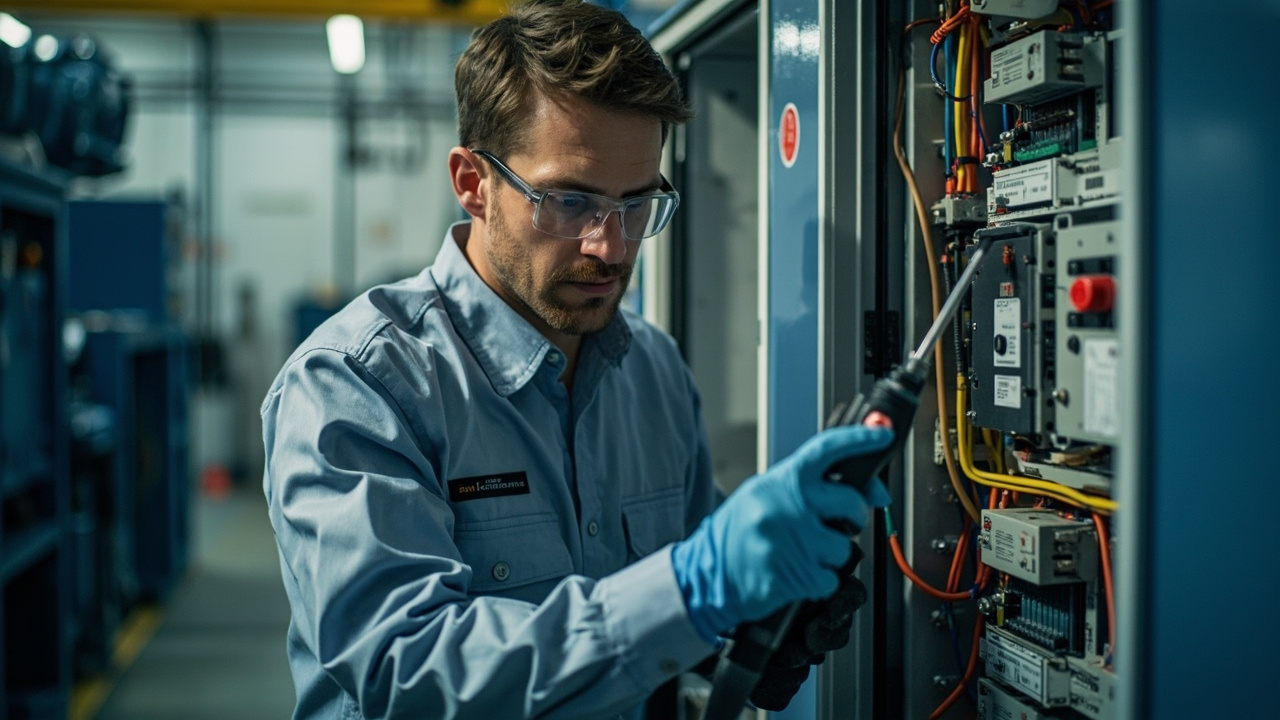
Our technicians carry calibrated test equipment to measure voltage imbalance, insulation resistance, and contact resistance in motor starters and contactors. We diagnose variable frequency drive faults by analyzing error codes, checking DC bus voltage, and testing gate driver circuits. For motor control panel services, we inspect bus bar connections, verify ground fault protection settings, and test interlock circuits that prevent equipment damage.

We handle emergency electric motor control repair by maintaining stock of critical components. Contactors, overload relays, and control transformers for common industrial motor sizes are available for immediate deployment. For motor control center services requiring cabinet-level intervention, we coordinate with your maintenance team to minimize downtime windows and implement temporary bypass solutions when possible.

Motor control system integration projects receive detailed planning. We review single-line diagrams, calculate load profiles, verify protective device coordination, and ensure new installations meet NEC Article 430 requirements. When retrofitting older motor control centers, we address obsolete components, upgrade to modern solid-state overloads, and implement remote monitoring capabilities that provide early warning of developing faults.

For industrial motor control solutions in high-consequence environments like food processing or pharmaceutical facilities, we follow lockout-tagout procedures rigorously, document all work with as-built drawings, and test safety interlocks before returning equipment to service.

What Happens When You Call Us for Motor Control Repair

Motor Control Services in Los Angeles – Industrial-Grade Solutions That Keep Your Operations Running
01

Emergency Dispatch and Assessment

You describe the failure. We ask targeted questions about symptoms, recent changes, and operational conditions. A technician arrives with diagnostic equipment and component inventory matched to your facility type. The initial assessment identifies the failure mode, determines whether repair or replacement is required, and establishes a timeline. You receive a clear scope before work begins, not after.
02

Precision Repair and Testing

We isolate the circuit, verify de-energization, and replace or repair the failed component. For variable frequency drives, we check parameter settings against motor nameplate data. For motor starters, we verify contact pressure and measure coil resistance. Every repair includes power quality testing to identify upstream issues that could cause repeat failures. We document findings and recommend preventive measures to extend service life.
03

Commissioning and Documentation

Before returning equipment to service, we run functional tests under no-load and load conditions. We verify proper rotation, check current draw against baseline values, and test all safety interlocks. You receive documentation showing test results, replacement parts used, and recommended maintenance intervals. For motor control center services, we update panel labels and provide as-built drawings that reflect all changes made during the repair.

Why Los Angeles Facilities Trust Our Motor Control Expertise

Elite Electricians Los Angeles has worked inside the industrial facilities that power this region's economy. We understand the Los Angeles Department of Building and Safety requirements for electrical modifications in commercial buildings. We know how to navigate permit requirements for motor control system integration projects in jurisdictions from Torrance to Burbank.

Our technicians recognize the unique challenges of Los Angeles industrial environments. Facilities near the 710 freeway corridor deal with vibration that loosens connections. Warehouses in the San Fernando Valley face extreme attic temperatures that stress control components. Food processing plants in Vernon require sanitary-rated enclosures and wash-down protection. We select components and design installations that address these specific conditions.

When you call us for motor control panel services, you work with technicians who read ladder logic, understand motor protection curves, and can troubleshoot both legacy relay-based systems and modern PLC-controlled installations. We have diagnosed Allen-Bradley, Siemens, and Schneider Electric systems. We have retrofitted motor control centers from the 1980s and integrated new variable frequency drives into existing SCADA networks.

Local suppliers know us. When an obsolete contactor needs replacement in a 40-year-old motor control center, we source compatible alternatives quickly. When a specialized component requires overnight delivery, our relationships with distributors in City of Industry and Carson ensure you get what you need.

We do not just fix immediate problems. We evaluate your entire motor control infrastructure and identify vulnerabilities before they cause unplanned downtime. Thermal imaging reveals overheating connections. Power quality analysis uncovers voltage imbalance stressing motor windings. Insulation testing predicts impending ground faults. This proactive approach saves you from emergency calls at the worst possible times.

What You Can Expect From Our Motor Control Services

Rapid Response When Production Stops

Emergency motor control failures get priority dispatch. You will speak directly with a technician who understands motor control systems, not a call center. We maintain service vehicles stocked with common repair components for immediate deployment. For facilities in central Los Angeles, Vernon, and Commerce, response time targets two hours or less during business hours. After-hours and weekend service is available because production schedules do not respect business hours. We coordinate with your maintenance team to work efficiently within your operational constraints and safety protocols.

Thorough Diagnostic Process

Our assessment goes beyond the obvious symptom. We measure voltage and current at multiple points, check phase balance, test insulation resistance, and verify ground continuity. For intermittent faults, we use data logging equipment to capture transient conditions. Variable frequency drive diagnostics include parameter verification, DC bus measurement, and gate driver testing. Motor starter evaluation includes contact inspection, coil resistance measurement, and overload calibration verification. You receive a written diagnostic report explaining what failed, why it failed, and what conditions contributed to the failure.

Quality Repairs That Last

We install industrial-grade components matched to your application demands. Motor starters are sized correctly for locked rotor current and duty cycle. Variable frequency drives are programmed with proper acceleration ramps and current limits. Control panel modifications follow NEC wiring methods and include proper conductor sizing, short circuit protection, and thermal management. All work is tested under load conditions before we consider the job complete. You receive documentation showing all measurements, settings, and parts installed. The repair solves the problem permanently, not temporarily.

Preventive Maintenance Programs

Scheduled motor control center services prevent emergency failures. Annual inspections include thermal imaging to identify hot connections, insulation resistance testing to predict ground faults, and contact inspection to catch wear before failure. We test protective relays, verify ground fault protection settings, and check control circuit integrity. Variable frequency drives receive parameter backup, cooling fan inspection, and capacitor testing. Preventive maintenance identifies problems during scheduled downtime instead of discovering them when production must run. Service records track component condition over time and predict replacement needs before failures occur.

Frequently Asked Questions

You Have Questions,
We Have Answers

What does a motor control do? +

A motor control manages the starting, stopping, speed, and direction of electric motors in commercial and industrial settings. It regulates voltage and current to protect motors from overload, prevent electrical damage, and optimize performance. In Los Angeles manufacturing facilities and high-rise buildings, motor controls maintain HVAC systems, conveyor lines, pumps, and compressors. They extend equipment life, reduce energy consumption, and prevent costly downtime. Modern controls integrate with building management systems for remote monitoring and diagnostics. Proper motor control specification directly impacts your operational efficiency and compliance with California Title 24 energy standards.

What is the purpose of an MCC? +

A Motor Control Center (MCC) is a centralized electrical enclosure that houses multiple motor starters, drives, and control devices in a single assembly. It consolidates power distribution and motor management for industrial operations, reducing installation costs and simplifying maintenance. Los Angeles warehouses, commercial kitchens, and manufacturing plants use MCCs to control multiple motors from one location. The panel-based design allows for standardized components, faster troubleshooting, and reduced floor space requirements. MCCs improve safety by containing electrical components in NEMA-rated enclosures and provide lockout-tagout points for maintenance protocols required under Cal/OSHA regulations.

What is a motor control job description? +

Motor control technicians install, program, troubleshoot, and maintain electrical systems that operate industrial motors. Responsibilities include reading electrical schematics, wiring motor starters and variable frequency drives, calibrating speed controls, and diagnosing faults using multimeters and analyzers. In Los Angeles commercial facilities, technicians ensure compliance with NEC Article 430 and local electrical codes. The role requires interpreting PLC logic, performing preventive maintenance on MCCs, and coordinating equipment shutdowns to minimize production disruption. Technicians document modifications, update panel schedules, and work with facility managers to optimize energy consumption and reduce operational costs across multi-motor systems.

What is the difference between a MCC and a VFD? +

An MCC is a physical enclosure housing multiple motor starters and control devices. A Variable Frequency Drive (VFD) is a specific motor control device that adjusts motor speed by varying input frequency and voltage. You can install VFDs inside an MCC or as standalone units. MCCs typically use across-the-line starters for fixed-speed applications, while VFDs provide precise speed control for processes requiring variable flow rates. Los Angeles facilities choose VFDs for HVAC applications to meet California energy efficiency mandates, reducing power consumption by 20 to 50 percent. MCCs offer centralized control, while VFDs deliver advanced motor performance and energy savings.

What are common motor controller problems? +

Common motor controller problems include overheating due to inadequate ventilation, contact welding from repetitive high-current switching, and coil failures caused by voltage fluctuations. Los Angeles facilities experience accelerated insulation degradation from continuous high-temperature operation in poorly cooled electrical rooms. Loose terminal connections create resistance and arcing. Dust accumulation on control boards causes tracking and shorts. Electromagnetic interference disrupts solid-state controls in environments with multiple VFDs. Improper overload relay settings lead to nuisance tripping or inadequate motor protection. Aging contactors exhibit delayed pickup or dropout. Regular thermal imaging and contact inspection prevent unexpected failures and production downtime.

What is an example of motor control? +

A commercial building's HVAC system uses motor control to regulate rooftop air handling units. The control modulates fan speed based on temperature setpoints, maintains optimal airflow, and sequences multiple motors to prevent simultaneous starting that would trip breakers. In Los Angeles office buildings, motor controls interface with energy management systems to reduce demand during peak electricity pricing periods. The control monitors amperage, detects bearing wear through vibration analysis, and sends alerts before failure occurs. This application demonstrates how motor control extends equipment life, reduces energy costs, and maintains comfortable conditions across multi-zone commercial spaces.

What are common MCC problems? +

Common MCC problems include bus bar overheating from loose bolts or corrosion, bucket compartment failures from improper racking, and ground fault issues from moisture intrusion. Los Angeles industrial facilities face contactor coil failures due to voltage sags during summer peak demand periods. Improper coordination between protective devices causes cascading shutdowns. Arc flash hazards increase when maintenance intervals are extended. Control transformer failures interrupt low-voltage circuits. Inadequate labeling creates troubleshooting delays. Missing or damaged interlocks allow unsafe bucket removal under load. Environmental factors like concrete dust in distribution centers accelerate component degradation and require filtered ventilation systems in electrical rooms.

How does MCC work? +

An MCC distributes three-phase power from a main breaker to individual motor starter buckets, each controlling one motor. When you activate a control circuit, the starter's coil energizes, closing contacts that supply power to the motor. Overload relays monitor current and trip if amperage exceeds safe limits. The bucket design allows removal and replacement without de-energizing adjacent starters, reducing downtime. In Los Angeles facilities, MCCs integrate with programmable logic controllers for automated sequencing. The vertical or horizontal lineup configuration organizes motors by process area, simplifying troubleshooting and providing clear lockout points for maintenance procedures.

Who determines MCC code? +

MCC code requirements are established by the National Electrical Code (NEC), specifically Article 430 for motor circuits and Article 409 for industrial control panels. The California Electrical Code adopts NEC standards with state amendments. Los Angeles Department of Building and Safety enforces these codes through plan review and inspection. Equipment must meet UL 845 listing requirements. Your electrical engineer determines specific MCC configuration based on motor horsepower, voltage, and application. The Authority Having Jurisdiction (AHJ) verifies compliance with short-circuit current ratings, wire sizing, and overcurrent protection. Local amendments may impose stricter seismic bracing requirements for equipment installed in commercial buildings.

What are three types of motor controls? +

The three primary motor control types are manual starters, magnetic starters, and variable frequency drives. Manual starters use physical switches for small motors under two horsepower, common in workshop equipment. Magnetic starters employ electromagnetic coils to close power contacts, suitable for larger motors requiring remote or automatic operation. VFDs provide precise speed control by adjusting frequency and voltage, essential for pumps, fans, and conveyors. Los Angeles commercial facilities predominantly use magnetic starters in MCCs for reliability and VFDs for energy-intensive applications to comply with Title 24 efficiency standards. Selection depends on motor size, duty cycle, and process requirements.

How Los Angeles Industrial Demands Make Motor Control Reliability Critical

Los Angeles hosts the largest manufacturing base in the western United States. Facilities in Vernon process food 24 hours per day. Distribution centers in Commerce move goods through the Port of Los Angeles supply chain without pause. Garment factories in Downtown and pharmaceutical plants in the San Fernando Valley operate on tight production schedules. A motor control failure that stops a conveyor system or halts a process line creates immediate financial consequences. The concentration of just-in-time logistics operations means downtime ripples through supply chains. Motor control system integration and electric motor control repair must be executed with precision because facilities cannot afford extended outages or repeat failures.

Elite Electricians Los Angeles has built relationships with facility managers, plant engineers, and maintenance supervisors throughout the industrial corridors of this region. We understand Los Angeles Department of Building and Safety electrical permit requirements. We know which inspectors prioritize specific code sections. We have worked inside facilities that require background checks, safety orientations, and strict protocol adherence. When you need motor control panel services or industrial motor control solutions, you work with technicians who have navigated Los Angeles industrial environments successfully. Local expertise matters because every jurisdiction has quirks, every inspector has preferences, and every facility has unique operational constraints.
Electrical Services in The Los Angeles Area

Looking for expert electrical services near you? Elite Electricians Los Angeles proudly delivers trusted electrical solutions to homeowners and businesses throughout the greater Los Angeles area. From electrical repairs and circuit panel upgrades to lighting installations and emergency power restoration, our licensed electricians are equipped to handle it all. Whether you're in Burbank, Santa Monica, Pasadena, or surrounding neighborhoods, we’re ready to respond with speed and precision.

Address:
Elite Electricians Los Angeles, 1901 Ave of the Stars 2nd Floor, Los Angeles, CA, 90067

Additional Services We Offer

Our news updates

Latest Articles & News from The Blogs

Hardwired vs Battery Powered Smart Security Cameras for Your Baldwin Hills Property Choosing between hardwired and battery powered security cameras…

Hardwired vs battery powered smart security cameras for your Baldwin Hills property

Hardwired vs Battery Powered Smart Security Cameras for Your Baldwin Hills Property Choosing between hardwired and battery powered security cameras…

What it actually costs to move your main electrical meter in North Hollywood

What it actually costs to move your main electrical meter in North Hollywood Moving an electrical meter sounds simple until…

Is Your Toluca Lake Home Ready for Solar Panels? (How to Check Your Electrical Capacity)

Is Your Toluca Lake Home Ready for Solar Panels? (How to Check Your Electrical Capacity) Thinking about adding solar panels…

Contact Us

Production downtime costs money every minute. Call Elite Electricians Los Angeles at (213)277-8815 now for immediate dispatch. Our technicians diagnose failures accurately and implement repairs that last. You need your facility running. We make that happen.