
Finding the best location for a new electrical subpanel during a home addition in Arleta
When planning a home addition in Arleta the placement of your new electrical subpanel can make or break your project. Getting it wrong means failing inspections wasting money and creating safety hazards. Getting it right means smooth permits fast installation and years of reliable power.. Read more about Navigating the Los Angeles Electrical Permit Process for Your Echo Park Home Addition.
Arleta homes built in the 1950s through 1970s often have outdated electrical systems that struggle with modern loads. Adding square footage without upgrading your panel creates dangerous overload conditions. The California Electrical Code and Los Angeles Department of Building and Safety have strict requirements for subpanel placement that go beyond simple convenience. Los Angeles Department of Building and Safety electrical code amendments.
This guide walks you through exactly where to install your subpanel what clearances you need and how to avoid common mistakes that cost Arleta homeowners time and money.
Understanding subpanel basics for Arleta additions
A subpanel is a smaller circuit breaker panel that distributes power from your main service panel to a specific area of your home. Unlike your main panel it does not have the main disconnect breaker. Instead it receives power through feeder conductors from the main panel.
For home additions in Arleta you typically need a subpanel when:
- You add more than 500 square feet of living space
- You install new major appliances like HVAC units or EV chargers
- Your main panel is at capacity and cannot handle additional circuits
The subpanel must be sized to handle the expected load. A 100-amp subpanel works for most room additions while larger additions with multiple circuits may need 150 or 200 amps.
National and California clearance requirements
The National Electrical Code Article 110.26 and California Electrical Code Title 24 establish specific working space requirements for all electrical equipment. These are not suggestions. They are mandatory safety standards that LADBS inspectors check during final inspections. National Electrical Code Article 110.26.
Working space must be clear and unobstructed in all directions. The minimum dimensions are:
| Dimension | Minimum Requirement |
|---|---|
| Depth | 36 inches from the front of the panel |
| Width | 30 inches or the width of the panel whichever is greater |
| Height | 6.5 feet from the floor to the top of the panel |
This working space must remain clear at all times. You cannot store boxes in front of the panel or use the space for shelving. The area must be well-lit and have a dedicated light switch near the panel.
Breaker handle height is also regulated. No breaker handle can be more than 6 feet 7 inches above the floor. This means your subpanel must be mounted between 4 and 6 feet high depending on its size.
The best locations for a subpanel in an Arleta home
Based on working space requirements and common Arleta home layouts certain locations work better than others. Here are the top options from most to least recommended.
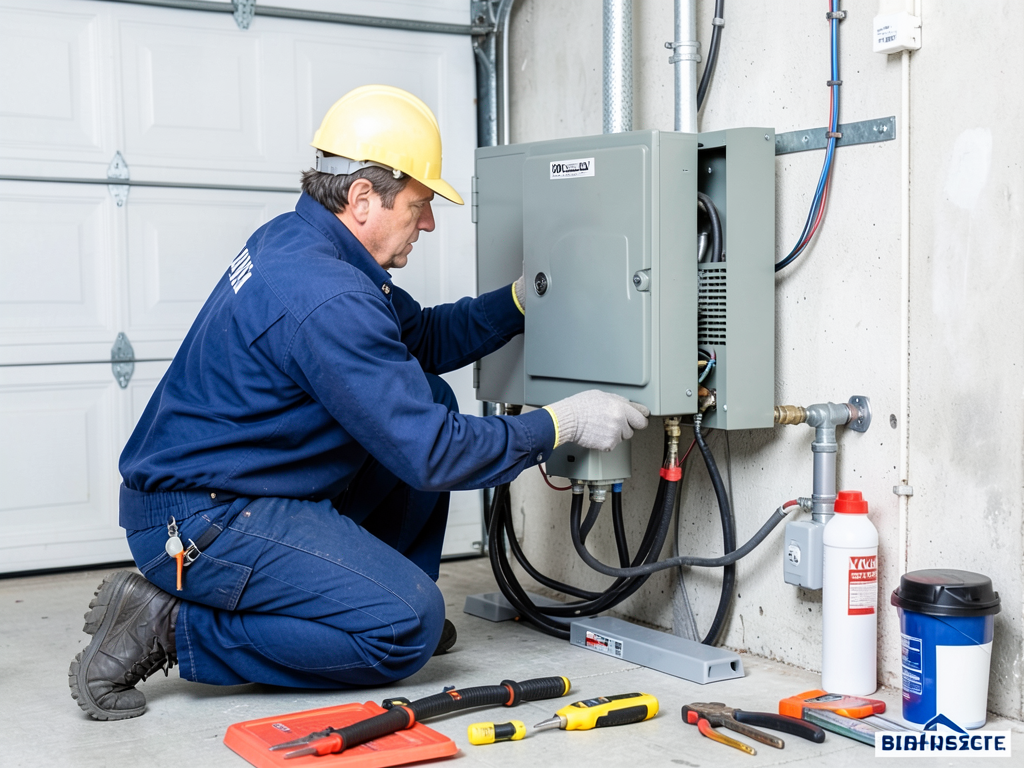
Attached garages: The gold standard
Attached garages in Arleta provide ideal conditions for subpanel installation. They typically offer:
- Plenty of wall space for the required 30-inch width
- Concrete floors that make mounting easier
- Easy access from the main living area
- Good ventilation and lighting
Most Arleta homes have attached garages built as part of the original construction. The garage wall opposite the house entry door often provides the perfect spot. You get the required clearances without sacrificing living space.
Just remember the garage counts as a utility space not a living space. You cannot install the panel behind stored items or in a corner blocked by shelving.
Utility rooms and basements
Utility rooms offer another excellent option especially for additions that extend the main living area. These rooms already house water heaters HVAC equipment and laundry appliances so adding a subpanel makes sense. Is Your Sherman Oaks Home Ready for a 200 Amp Panel Upgrade?.
Basements are less common in Arleta than in other parts of Los Angeles but some hillside homes have partial basements or crawl spaces that work well. The key is finding a wall with enough clear space in front of it. Finding an Emergency Electrician in Silver Lake Who Actually Answers the Phone.
Utility rooms need good lighting and ventilation. If the room has a gas water heater or furnace you must maintain proper clearances from combustion sources as specified in the California Mechanical Code.. Read more about How to plan a professional holiday lighting display in Toluca Lake without blowing your main breaker.
Hallways and common areas
When garage or utility space is not available hallways can work if they meet the clearance requirements. The hallway must be at least 36 inches wide to provide the required working space.
Hallway installations work best in wider hallways common in ranch-style Arleta homes. You must ensure the panel does not create a tripping hazard or block emergency egress.
Common areas like mudrooms or laundry pass-throughs can also work if they have adequate wall space and meet all clearance requirements.
Illegal locations: Where you cannot install a subpanel
Certain locations are absolutely prohibited by code. Installing in these areas will fail inspection and create serious safety hazards. Installing a backup generator for your Hollywood Hills home before the next outage.
- Bathrooms: Moisture and electrical equipment create shock hazards
- Clothes closets: Lack of ventilation and proximity to flammable materials
- Above stairs: Creates a fall hazard and violates working space requirements
- Near gas meters or propane tanks: Fire and explosion hazards
- Inside living spaces where clearances cannot be maintained: Bedrooms living rooms kitchens
Arleta has many older homes with unusual layouts. Some homeowners try to hide panels in bedroom closets or behind furniture. This violates code and creates dangerous conditions. The panel must be readily accessible to emergency responders.
Outdoor installations require NEMA 3R rated enclosures to protect against weather. In Arleta’s climate you must also consider sun exposure which can cause overheating in dark-colored enclosures.
Los Angeles specific considerations
The City of Los Angeles Department of Building and Safety has additional requirements beyond state code. LADBS requires:
- Permits for all subpanel installations regardless of size
- Inspection by a certified electrical inspector
- Proper labeling of all circuits and the main disconnect location
- Grounding and bonding that meets LA-specific requirements
Arleta falls within LADWP service territory. This means your installation must meet LADWP requirements for interconnection and metering. If you are adding significant load you may need to upgrade your service drop from the pole.. Read more about How to qualify for LADWP electrical rebates and incentives for your home in the San Fernando Valley.
Seismic considerations matter in Arleta. The area sits near several active fault lines. Your subpanel must be mounted to withstand earthquake forces. This typically means using expansion anchors in concrete or proper blocking in wood-framed walls.
Fire safety is critical in older Arleta neighborhoods where homes are close together. Your subpanel installation must maintain proper clearances from property lines and adjacent structures.
Outdoor subpanel considerations for Arleta
Sometimes indoor space is not available. Outdoor installations can work if done correctly. Arleta’s climate creates specific challenges.
Outdoor subpanels need NEMA 3R rated enclosures that protect against rain sun and dust. The enclosure must be mounted at least 4 feet above grade to prevent water damage from sprinklers or flooding.
Sun exposure in Arleta can reach 100 degrees Fahrenheit during summer. Dark-colored enclosures absorb heat which can cause breakers to trip prematurely. Light-colored or reflective enclosures work better in direct sun.
Coastal salt air affects Arleta less than beach communities but if your home is in the eastern part of Arleta near the 5 freeway you may still experience some corrosion. Use stainless steel hardware and sealed conduit connections.
Outdoor installations require more frequent maintenance. Check the enclosure annually for signs of water intrusion rust or pest damage.
Grounding and bonding requirements
Subpanel grounding in Los Angeles has specific requirements that differ from other parts of the country. Your subpanel must be properly grounded but not bonded in the same way as your main panel.
The subpanel needs its own ground bus bar that is isolated from the neutral bus. This prevents neutral current from traveling on ground paths which can create shock hazards.
Grounding electrode conductors must connect to a proper grounding electrode system. In Arleta this typically means a cold water pipe ground or a ground rod system depending on your home’s construction.
Neutral conductors must be isolated from ground in the subpanel. This means separate neutral and ground bus bars with no bonding screws or straps connecting them.
Improper grounding is one of the most common inspection failures in Los Angeles. Make sure your electrician understands the difference between main panel and subpanel grounding requirements.. Read more about Installing electric radiant floor heating in your luxury bathroom remodel in Beverly Hills.
Permit process for Arleta subpanel installation
Getting permits in Arleta requires working with LADBS. The process typically takes 2-4 weeks depending on workload.
You need to submit:
- Electrical permit application
- Site plan showing the panel location
- Load calculation showing why the subpanel is needed
- Panel schedule listing all circuits
- Grounding diagram
Inspections happen in two stages. The rough inspection happens after mounting but before connecting wires. The final inspection happens after all wiring is complete and the panel is energized. Safely Wiring Your New Pool or Hot Tub in Encino.
Permit fees in Arleta typically range from $200 to $500 depending on the scope of work. This does not include the cost of the permit application which your electrician will handle.
Never skip permits. Unpermitted work can cause insurance problems lower your home’s value and create liability if you sell the home.
Cost factors for subpanel installation in Arleta
Several factors affect the cost of subpanel installation in Arleta:
| Factor | Impact on Cost |
|---|---|
| Panel size (100 vs 200 amp) | $100-300 difference |
| Distance from main panel | $10-20 per foot for feeder wiring |
| Mounting surface (concrete vs drywall) | $50-150 for special hardware |
| Permit fees | $200-500 depending on scope |
| Emergency replacement vs planned installation | Emergency service calls add $200-400 |
Most Arleta homeowners spend between $1500 and $3500 for a complete subpanel installation including permits and inspections.
Older homes may need additional work like upgrading the main panel or replacing old wiring. These can add $1000 to $5000 to the project cost. Upgrading your Beverly Hills estate to a 400 amp electrical service.
DIY vs professional installation
While some homeowners attempt DIY electrical work subpanel installation is not a good candidate for DIY in Arleta. Here is why:
- Permits require a licensed electrician signature
- Improper installation creates fire and shock hazards
- Insurance may not cover damage from unpermitted work
- Future home sales require proof of permits and inspections
Professional installation ensures your work meets all code requirements passes inspection and comes with a warranty. It also protects you from liability if something goes wrong.
Look for a C-10 licensed electrician with experience in Los Angeles permits and inspections. They should provide a written proposal that includes permit costs inspection fees and warranty information.
Maintenance and safety tips
Once your subpanel is installed proper maintenance keeps it working safely for years.
- Check the panel cover quarterly for signs of damage or discoloration
- Test breakers annually by switching them off and on
- Keep the area in front of the panel completely clear
- Replace any breakers that feel loose or do not stay in the on position
- Have the panel inspected every 5 years by a qualified electrician
Arleta’s warm climate means dust and insects can enter outdoor panels. Clean the enclosure annually and check for signs of pest intrusion.
If you notice burning smells hear buzzing sounds or see scorch marks on the panel cover call an electrician immediately. These are signs of dangerous conditions that need immediate attention.
Frequently Asked Questions
Can I install a subpanel in my bedroom closet?
No. Clothes closets are specifically prohibited locations for electrical panels. The combination of flammable materials limited ventilation and required clearances makes this extremely dangerous and a code violation.
How far from my main panel does the subpanel need to be?
There is no maximum distance requirement but longer runs increase voltage drop and installation costs. Most installations keep the subpanel within 50-100 feet of the main panel. The distance must allow for proper feeder conductor sizing.
Do I need a permit for a subpanel in Arleta?
Yes. All subpanel installations in Los Angeles require permits regardless of size. LADBS requires permits for any new electrical equipment installation including subpanels.
Can I use my subpanel as the main disconnect for my addition?
No. Only the main service panel can serve as the primary disconnect. Your subpanel must receive power from the main panel through properly sized feeder conductors.
What size subpanel do I need for a 500 square foot addition?
Most 500 square foot additions need a 100-amp subpanel. This provides enough capacity for lighting circuits outlets and one or two dedicated appliance circuits. Larger additions or those with multiple heavy loads may need 150 or 200 amps.
How long does subpanel installation take?
Installation typically takes 4-8 hours for a straightforward project. This does not include permit processing time which adds 2-4 weeks. Emergency replacements can often be completed in one day once permits are approved.
Can I install a subpanel myself to save money?
You can attempt DIY but it will not save money in the long run. You still need permits which require a licensed electrician. DIY mistakes can cause fires shock hazards and failed inspections that cost more to fix than professional installation.
What happens if I install without permits?
Unpermitted work can cause insurance claims to be denied create liability if someone is injured and require expensive remediation when discovered. It also lowers your home’s value and can prevent you from selling until permits are obtained and inspections passed.
How do I know if my subpanel is properly grounded?
Proper grounding requires testing with specialized equipment. Signs of proper grounding include no neutral-to-ground connections in the subpanel separate ground and neutral bus bars and proper connections to grounding electrodes. Only a qualified electrician can verify proper grounding.
Should I upgrade my main panel when adding a subpanel?
It depends on your main panel’s capacity and the load you are adding. If your main panel is already near capacity or over 25 years old upgrading both panels together often makes sense. Your electrician can calculate your load and recommend the best approach.
You may also find this helpful. Installing high-powered infrared patio heaters for your outdoor dining space in Pico-Robertson.
{
“@context”: “https://schema.org”,
“@type”: “BlogPosting”,
“headline”: “Finding the best location for a new electrical subpanel during a home addition in Arleta”,
“description”: “Expert guide to subpanel placement in Arleta homes. Learn California code requirements, LADBS permit rules, and the best locations for your electrical upgrade.”,
“wordCount”: 2351,
“datePublished”: “2026-05-30T07:51:00.000Z”,
“dateModified”: “2026-05-30T07:51:00.000Z”,
“inLanguage”: “en-US”,
“mainEntityOfPage”: {
“@type”: “WebPage”,
“@id”: “https://eliteelectricianslosangeles.com”
},
“publisher”: {
“@type”: “LocalBusiness”,
“name”: “Elite Electricians Los Angeles”,
“url”: “https://eliteelectricianslosangeles.com”
},
“author”: {
“@type”: “Organization”,
“name”: “Elite Electricians Los Angeles”,
“url”: “https://eliteelectricianslosangeles.com”
},
“image”: {
“@type”: “ImageObject”,
“url”: “https://eliteelectricianslosangeles.com/wp-content/uploads/2026/03/finding-the-best-location-for-a-new-electrical-sub-1.png”
}
}
{
“@context”: “https://schema.org”,
“@type”: “Electrician”,
“name”: “Elite Electricians Los Angeles”,
“url”: “https://eliteelectricianslosangeles.com”,
“address”: {
“@type”: “PostalAddress”,
“addressLocality”: “Los Angeles”
},
“areaServed”: {
“@type”: “City”,
“name”: “Los Angeles”
}
}
{
“@context”: “https://schema.org”,
“@type”: “FAQPage”,
“mainEntity”: [
{
“@type”: “Question”,
“name”: “Can I install a subpanel in my bedroom closet?”,
“acceptedAnswer”: {
“@type”: “Answer”,
“text”: “No. Clothes closets are specifically prohibited locations for electrical panels. The combination of flammable materials limited ventilation and required clearances makes this extremely dangerous and a code violation.”
}
},
{
“@type”: “Question”,
“name”: “How far from my main panel does the subpanel need to be?”,
“acceptedAnswer”: {
“@type”: “Answer”,
“text”: “There is no maximum distance requirement but longer runs increase voltage drop and installation costs. Most installations keep the subpanel within 50-100 feet of the main panel. The distance must allow for proper feeder conductor sizing.”
}
},
{
“@type”: “Question”,
“name”: “Do I need a permit for a subpanel in Arleta?”,
“acceptedAnswer”: {
“@type”: “Answer”,
“text”: “Yes. All subpanel installations in Los Angeles require permits regardless of size. LADBS requires permits for any new electrical equipment installation including subpanels.”
}
},
{
“@type”: “Question”,
“name”: “Can I use my subpanel as the main disconnect for my addition?”,
“acceptedAnswer”: {
“@type”: “Answer”,
“text”: “No. Only the main service panel can serve as the primary disconnect. Your subpanel must receive power from the main panel through properly sized feeder conductors.”
}
},
{
“@type”: “Question”,
“name”: “What size subpanel do I need for a 500 square foot addition?”,
“acceptedAnswer”: {
“@type”: “Answer”,
“text”: “Most 500 square foot additions need a 100-amp subpanel. This provides enough capacity for lighting circuits outlets and one or two dedicated appliance circuits. Larger additions or those with multiple heavy loads may need 150 or 200 amps.”
}
},
{
“@type”: “Question”,
“name”: “How long does subpanel installation take?”,
“acceptedAnswer”: {
“@type”: “Answer”,
“text”: “Installation typically takes 4-8 hours for a straightforward project. This does not include permit processing time which adds 2-4 weeks. Emergency replacements can often be completed in one day once permits are approved.”
}
},
{
“@type”: “Question”,
“name”: “Can I install a subpanel myself to save money?”,
“acceptedAnswer”: {
“@type”: “Answer”,
“text”: “You can attempt DIY but it will not save money in the long run. You still need permits which require a licensed electrician. DIY mistakes can cause fires shock hazards and failed inspections that cost more to fix than professional installation.”
}
},
{
“@type”: “Question”,
“name”: “What happens if I install without permits?”,
“acceptedAnswer”: {
“@type”: “Answer”,
“text”: “Unpermitted work can cause insurance claims to be denied create liability if someone is injured and require expensive remediation when discovered. It also lowers your home’s value and can prevent you from selling until permits are obtained and inspections passed.”
}
},
{
“@type”: “Question”,
“name”: “How do I know if my subpanel is properly grounded?”,
“acceptedAnswer”: {
“@type”: “Answer”,
“text”: “Proper grounding requires testing with specialized equipment. Signs of proper grounding include no neutral-to-ground connections in the subpanel separate ground and neutral bus bars and proper connections to grounding electrodes. Only a qualified electrician can verify proper grounding.”
}
}
]
}
{
“@context”: “https://schema.org”,
“@type”: “BreadcrumbList”,
“itemListElement”: [
{
“@type”: “ListItem”,
“position”: 1,
“name”: “Home”,
“item”: “https://eliteelectricianslosangeles.com”
},
{
“@type”: “ListItem”,
“position”: 2,
“name”: “Blog”,
“item”: “https://eliteelectricianslosangeles.com/blog”
},
{
“@type”: “ListItem”,
“position”: 3,
“name”: “Finding the best location for a new electrical subpanel during a home addition in Arleta”
}
]
}
{
“@context”: “https://schema.org”,
“@type”: “Service”,
“serviceType”: “Electricians”,
“provider”: {
“@type”: “LocalBusiness”,
“name”: “Elite Electricians Los Angeles”,
“url”: “https://eliteelectricianslosangeles.com”
},
“areaServed”: {
“@type”: “City”,
“name”: “Los Angeles”
},
“description”: “Expert guide to subpanel placement in Arleta homes. Learn California code requirements, LADBS permit rules, and the best locations for your electrical upgrade.”
}