
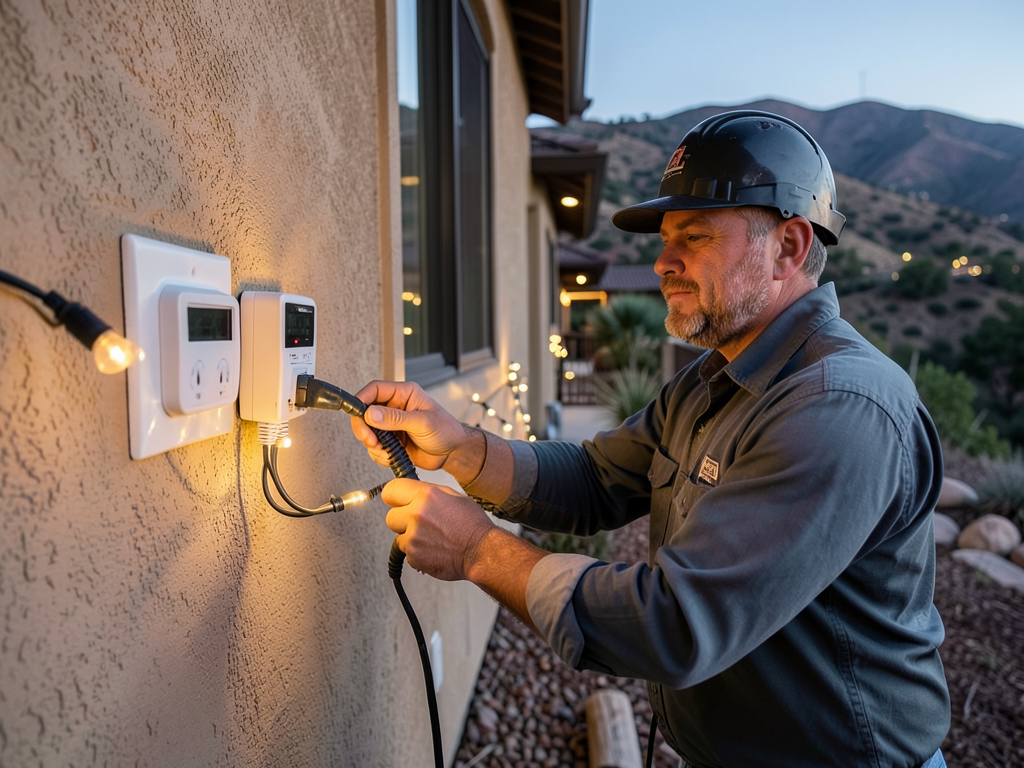
Electrical safety tips for your first Porter Ranch holiday light display
Your first holiday light display in Porter Ranch can transform your home into a neighborhood highlight. The mild Los Angeles winters and suburban setting make Porter Ranch perfect for elaborate outdoor lighting. But before you string those first bulbs, you need to understand the electrical safety rules that protect your home from overloaded circuits and fire hazards. Electrical Inglewood.
Why Porter Ranch holiday lighting needs special attention
Porter Ranch homes often feature large front yards and expansive rooflines. Many properties sit on hillsides with unique electrical challenges. The area’s mix of newer construction and older homes means wiring conditions vary dramatically from house to house. Safely Wiring Your New Pool or Hot Tub in Encino.
According to the National Fire Protection Association, holiday lighting causes an average of 770 home structure fires annually in the United States. Overloaded circuits and damaged wiring are the primary culprits. In Porter Ranch, where many homes display thousands of lights, the risk multiplies without proper precautions. National Fire Protection Association holiday safety guidelines.
Understanding your home’s electrical capacity
Before hanging any lights, you need to know what your electrical system can handle. Most Porter Ranch homes built after 2000 have 200-amp service panels. Older homes might only have 100-amp service. Electrical Compton.
Standard outdoor outlets typically run on 15-amp or 20-amp circuits. A 15-amp circuit at 120 volts can safely handle 1,800 watts. A 20-amp circuit handles 2,400 watts. But you should never load a circuit beyond 80% of its capacity for continuous use.
Here’s what that means for your display:
| Circuit Type | Maximum Watts | Safe Continuous Load |
|---|---|---|
| 15-amp circuit | 1,800W | 1,440W |
| 20-amp circuit | 2,400W | 1,920W |
LED lights use about 10% of the power of incandescent bulbs. A 100-foot string of incandescent C9 bulbs draws about 500 watts. The same length in LED uses only 50 watts.
Essential safety equipment for outdoor displays
Every outdoor outlet in Porter Ranch should have Ground Fault Circuit Interrupter (GFCI) protection. GFCI outlets cut power when they detect ground faults, preventing electric shock in wet conditions.
Weather-resistant extension cords are non-negotiable. Look for cords rated for outdoor use with a W or SJTW marking. The gauge matters too. For runs over 50 feet, use 12-gauge wire instead of 14-gauge to prevent voltage drop.
Outdoor timers with built-in GFCI protection add convenience and safety. They automatically shut off lights during daylight hours and prevent overnight overloads.
Step-by-step installation safety checklist
- Inspect all light strings for frayed wires, cracked sockets, or damaged plugs
- Test each strand before installation to identify dead bulbs
- Calculate total wattage and verify it stays under 80% of circuit capacity
- Use only outdoor-rated extension cords and power strips
- Install GFCI-protected outlets or use GFCI adapters
- Secure all connections with electrical tape to prevent moisture intrusion
- Anchor light strings to prevent wind damage
- Test the entire display before finalizing installation
Managing the Los Angeles climate challenges
Porter Ranch experiences Santa Ana winds that can reach 60 mph. These winds turn loose light strings into dangerous projectiles and can snap support wires. Use plastic clips instead of nails or staples to attach lights. Metal fasteners can cut through wire insulation.
Although Porter Ranch sees less rain than coastal LA, winter storms still occur. Water and electricity don’t mix. Elevate all connections at least 12 inches off the ground. Use waterproof junction boxes for any splices.
Temperature fluctuations cause wires to expand and contract. This movement can loosen connections over time. Check all connections weekly during the display season.
Indoor safety for your holiday tree and decor
Christmas trees cause about 160 home fires annually according to the National Fire Protection Association. A dry tree can ignite in seconds when exposed to heat from lights.
Keep your tree at least three feet from any heat source. Water it daily to prevent drying. Use only UL-listed lights rated for indoor use on your tree.
The “rule of three” applies to stringing lights together. Never connect more than three strands of incandescent lights end-to-end. LED strings can usually handle longer runs, but check the manufacturer’s specifications.
Never run extension cords under rugs or furniture. The cords generate heat and can become fire hazards when covered.
Energy efficiency and cost management
Holiday lighting can significantly impact your LADWP bill. A modest incandescent display might add $50 to your December bill. An elaborate display with thousands of watts could add $200 or more.
LED lights reduce energy consumption by 80-90%. They also generate less heat, reducing fire risk. The initial cost is higher, but LEDs typically pay for themselves in energy savings within two seasons.
Consider these energy-saving strategies:
- Use timers to limit display hours to 6 PM – 10 PM
- Choose LED lights for 90% of your display
- Use spotlights to highlight key features instead of outlining entire structures
- Install solar-powered pathway lights to reduce electrical load
When to call a professional electrician
Some holiday lighting projects require professional electrical expertise. Call an electrician if: Electrical Long Beach.
- Your home has frequent circuit breaker trips when using multiple devices
- You notice flickering lights when outdoor displays turn on
- Your electrical panel is over 20 years old
- You want to install dedicated holiday lighting circuits
- You need outdoor GFCI outlets installed in your Porter Ranch home
Professional installation ensures your display meets National Electrical Code requirements and local Los Angeles building codes. An electrician can also install weatherproof outlet boxes and dedicated circuits that make future holiday displays safer and easier.
Common mistakes that lead to electrical failures
Overloading circuits is the most common error. People string too many lights together or plug too many extension cords into one outlet. This creates heat that can melt insulation and start fires.
Using indoor extension cords outside is another frequent mistake. Indoor cords lack weather-resistant insulation and can fail when exposed to moisture.
Nail and staple damage happens when people secure lights with metal fasteners. A single staple through a wire can create a short circuit that trips breakers or starts a fire.
Ignoring warning signs is dangerous. If you notice warm outlets, burning smells, or frequent breaker trips, stop using the circuit immediately.
Emergency procedures for electrical problems
Know where your main electrical panel is located. In Porter Ranch homes, panels are often in garages or on exterior walls. Label each circuit clearly so you can quickly shut off power if needed.
If a circuit breaker trips, wait 30 seconds before resetting it. If it trips again immediately, there’s a short circuit that needs professional attention.
For outdoor electrical fires, use a Class C fire extinguisher or baking soda. Never use water on an electrical fire.
If someone receives an electrical shock, do not touch them. Turn off power at the breaker first, then call 911.
Creating a safe holiday lighting plan
Start with a simple diagram of your property. Note the location of outdoor outlets, rooflines, trees, and walkways. Calculate the total linear feet you need to cover.
Group lights by circuit. Keep all lights on one circuit within 80% of that circuit’s safe capacity. Use different circuits for different areas of your display.
Document your setup with photos. This helps you recreate successful displays in future years and track any changes in your electrical system.
Local regulations and permit requirements
The City of Los Angeles requires permits for permanent outdoor electrical installations. Temporary holiday lighting usually doesn’t need permits, but check with your homeowners association.
Some Porter Ranch neighborhoods have specific guidelines about display timing and brightness. Check your HOA rules before investing in elaborate setups.
Commercial properties in Porter Ranch may need permits for extensive holiday lighting. Businesses should consult with licensed electricians to ensure compliance with California electrical codes.
Maintenance throughout the season
Inspect your display weekly for damage. Wind, rain, and temperature changes can affect connections and wire integrity. Replace any damaged strings immediately.
Clean light lenses periodically. Dirty lenses reduce brightness and can cause bulbs to overheat. Use a soft cloth and avoid getting water in sockets.
Check timer settings after power outages. Some timers reset to default settings and may turn lights on during inappropriate hours.
Taking down your display safely
Turn off all power before removing lights. Unplug everything and let it cool completely.
Remove lights carefully to avoid damaging wires. Wind and weather can make plastic clips brittle, so work slowly.
Store lights properly to prevent damage. Coil them loosely and store in dry containers. Test all strings before storing them for the season.
Inspect your electrical system after removing the display. Look for any signs of overheating or damage to outlets and wiring.
Frequently Asked Questions
How many lights can I safely connect to one outlet?
A standard 15-amp outlet can safely handle 1,440 watts of continuous load. LED lights use about 10% of the power of incandescent, so you could connect dozens of LED strings but only a few incandescent ones.
Should I use timers for my holiday lights?
Yes, timers improve safety by automatically turning lights off during daylight hours and preventing overnight overloads. They also save energy and extend bulb life.
What’s the difference between indoor and outdoor lights?
Outdoor lights have weather-resistant insulation and sealed connections. Indoor lights lack these protections and can fail or create shock hazards when used outside.
How do I know if my home’s wiring can handle holiday lights?
If your home is over 30 years old or you experience frequent breaker trips, have a licensed electrician inspect your electrical system before installing elaborate displays. Installing a backup generator for your Hollywood Hills home before the next outage.
Are LED lights really worth the extra cost?
Absolutely. LEDs use 80-90% less energy, last years longer, and generate minimal heat. They typically pay for themselves in energy savings within two seasons.
Ready to light up Porter Ranch safely?
Your first Porter Ranch holiday light display should bring joy, not worry. By following these electrical safety guidelines, you can create a beautiful display that protects your home and family.
If you’re unsure about your home’s electrical capacity or want to install dedicated holiday circuits, call Elite Electricians Los Angeles at (213) 277-8815. Our licensed C-10 electricians serve Porter Ranch and all Los Angeles communities. We’ll ensure your holiday lighting is safe, beautiful, and code-compliant.
Don’t let electrical concerns dim your holiday spirit. Contact us today for a safety inspection or professional installation. Your perfect Porter Ranch holiday display is just a phone call away. For more information, visit U.S. Department of Energy holiday lighting efficiency guide.
{
“@context”: “https://schema.org”,
“@type”: “BlogPosting”,
“headline”: “Electrical safety tips for your first Porter Ranch holiday light display”,
“description”: “Keep your Porter Ranch home safe this holiday season with expert electrical tips. Learn load management, GFCI protection, and when to call a pro.”,
“wordCount”: 1766,
“datePublished”: “2026-07-01T06:32:00.000Z”,
“dateModified”: “2026-07-01T06:32:00.000Z”,
“inLanguage”: “en-US”,
“mainEntityOfPage”: {
“@type”: “WebPage”,
“@id”: “https://eliteelectricianslosangeles.com”
},
“publisher”: {
“@type”: “LocalBusiness”,
“name”: “Elite Electricians Los Angeles”,
“url”: “https://eliteelectricianslosangeles.com”
},
“author”: {
“@type”: “Organization”,
“name”: “Elite Electricians Los Angeles”,
“url”: “https://eliteelectricianslosangeles.com”
},
“image”: {
“@type”: “ImageObject”,
“url”: “https://eliteelectricianslosangeles.com/wp-content/uploads/2026/03/electrical-safety-tips-for-your-first-porter-ranch-1.png”
}
}
{
“@context”: “https://schema.org”,
“@type”: “Electrician”,
“name”: “Elite Electricians Los Angeles”,
“url”: “https://eliteelectricianslosangeles.com”,
“address”: {
“@type”: “PostalAddress”,
“addressLocality”: “Los Angeles”
},
“areaServed”: {
“@type”: “City”,
“name”: “Los Angeles”
}
}
{
“@context”: “https://schema.org”,
“@type”: “FAQPage”,
“mainEntity”: [
{
“@type”: “Question”,
“name”: “How many lights can I safely connect to one outlet?”,
“acceptedAnswer”: {
“@type”: “Answer”,
“text”: “A standard 15-amp outlet can safely handle 1,440 watts of continuous load. LED lights use about 10% of the power of incandescent, so you could connect dozens of LED strings but only a few incandescent ones.”
}
},
{
“@type”: “Question”,
“name”: “Should I use timers for my holiday lights?”,
“acceptedAnswer”: {
“@type”: “Answer”,
“text”: “Yes, timers improve safety by automatically turning lights off during daylight hours and preventing overnight overloads. They also save energy and extend bulb life.”
}
},
{
“@type”: “Question”,
“name”: “What’s the difference between indoor and outdoor lights?”,
“acceptedAnswer”: {
“@type”: “Answer”,
“text”: “Outdoor lights have weather-resistant insulation and sealed connections. Indoor lights lack these protections and can fail or create shock hazards when used outside.”
}
},
{
“@type”: “Question”,
“name”: “How do I know if my home’s wiring can handle holiday lights?”,
“acceptedAnswer”: {
“@type”: “Answer”,
“text”: “If your home is over 30 years old or you experience frequent breaker trips, have a licensed electrician inspect your electrical system before installing elaborate displays. Installing a backup generator for your Hollywood Hills home before the next outage.”
}
},
{
“@type”: “Question”,
“name”: “Are LED lights really worth the extra cost?”,
“acceptedAnswer”: {
“@type”: “Answer”,
“text”: “Absolutely. LEDs use 80-90% less energy, last years longer, and generate minimal heat. They typically pay for themselves in energy savings within two seasons.”
}
},
{
“@type”: “Question”,
“name”: “Ready to light up Porter Ranch safely?”,
“acceptedAnswer”: {
“@type”: “Answer”,
“text”: “Your first Porter Ranch holiday light display should bring joy, not worry. By following these electrical safety guidelines, you can create a beautiful display that protects your home and family.”
}
}
]
}
{
“@context”: “https://schema.org”,
“@type”: “BreadcrumbList”,
“itemListElement”: [
{
“@type”: “ListItem”,
“position”: 1,
“name”: “Home”,
“item”: “https://eliteelectricianslosangeles.com”
},
{
“@type”: “ListItem”,
“position”: 2,
“name”: “Blog”,
“item”: “https://eliteelectricianslosangeles.com/blog”
},
{
“@type”: “ListItem”,
“position”: 3,
“name”: “Electrical safety tips for your first Porter Ranch holiday light display”
}
]
}
{
“@context”: “https://schema.org”,
“@type”: “Service”,
“serviceType”: “Electricians”,
“provider”: {
“@type”: “LocalBusiness”,
“name”: “Elite Electricians Los Angeles”,
“url”: “https://eliteelectricianslosangeles.com”
},
“areaServed”: {
“@type”: “City”,
“name”: “Los Angeles”
},
“description”: “Keep your Porter Ranch home safe this holiday season with expert electrical tips. Learn load management, GFCI protection, and when to call a pro.”
}