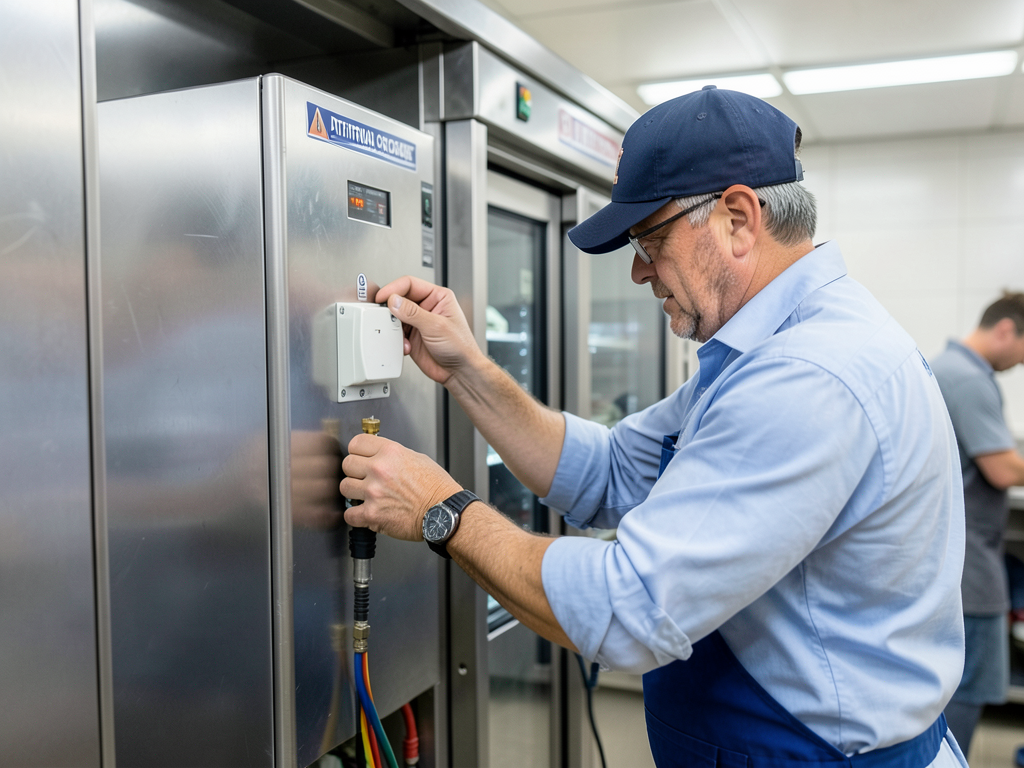
Commercial kitchens in Historic South Central face unique electrical challenges when installing new walk-in freezers. The neighborhood’s mix of older industrial buildings and retrofitted spaces means many facilities operate with outdated electrical systems that cannot handle modern refrigeration equipment. Understanding the specific electrical requirements before purchasing new freezers saves time and prevents costly mistakes. Installing a backup generator for your Hollywood Hills home before the next outage.
Walk-in freezers draw significant power during compressor startup and continuous operation. A typical reach-in freezer might use 115 volts at 15-20 amps while a large walk-in unit requires 208-230 volts at 30-50 amps. Some commercial kitchens in Historic South Central’s industrial corridor need three-phase power for heavy-duty refrigeration systems. The National Electrical Code requires dedicated circuits for all commercial refrigeration equipment to prevent nuisance tripping and ensure food safety. National Electrical Manufacturers Association.
Historic South Central’s building stock presents particular challenges. Many warehouses and former manufacturing spaces along Central Avenue were built before modern electrical codes existed. These buildings often have undersized service panels and outdated wiring that cannot support new commercial kitchen equipment. Before installing new walk-in freezers property owners must evaluate their existing electrical infrastructure including panel capacity and wire gauge. Safely Wiring Your New Pool or Hot Tub in Encino.
Voltage and amperage requirements for commercial freezers
Commercial walk-in freezers come in several voltage configurations. Standard reach-in units typically operate on 115 volts single-phase power using a standard 5-15P plug. Larger walk-in freezers require 208-230 volts single-phase or three-phase power. Three-phase power provides more efficient operation for large refrigeration systems and reduces energy costs over time.
Amperage draw varies significantly between freezer models. A small glass door merchandiser might draw 6-8 amps while a large walk-in freezer compressor can draw 30-50 amps during startup. The inrush current during compressor startup often exceeds running amperage by 3-5 times. This surge requires properly sized circuit breakers and wiring to prevent nuisance tripping.
Compressor motors need specific voltage stability to operate efficiently. Voltage drops below 10% of rated voltage can cause motor overheating and premature failure. Historic South Central’s older electrical infrastructure sometimes cannot maintain stable voltage during peak demand periods. Installing a dedicated circuit with proper wire gauge ensures consistent voltage delivery to critical refrigeration equipment. Electrical Inglewood.
NEMA plug configurations and receptacle requirements
Commercial freezers use specific NEMA plug configurations based on voltage and amperage requirements. Common configurations include 5-15P for 115V 15A circuits 5-20P for 115V 20A circuits 6-15P for 208V 15A circuits and 6-20P for 208V 20A circuits. Three-phase equipment uses configurations like L14-20P or L21-30P.
The National Electrical Manufacturers Association standardizes these plug configurations to prevent mismatched connections. Using the correct NEMA configuration ensures safe operation and code compliance. Installing receptacles that match freezer plug configurations prevents damage to equipment and reduces fire hazards. National Electrical Code.
Commercial kitchens in Historic South Central must verify that existing receptacles match new freezer requirements. Many older buildings have standard 5-15R receptacles that cannot support larger freezer units. Upgrading to proper NEMA configurations often requires new wiring and circuit installation. A licensed electrician must verify that existing wiring can handle increased electrical loads before installing new receptacles. Upgrading your Beverly Hills estate to a 400 amp electrical service.
Dedicated circuit requirements for commercial refrigeration
The National Electrical Code mandates dedicated circuits for all commercial refrigeration equipment. A dedicated circuit serves only one appliance preventing overload from other devices. This requirement protects compressor motors from voltage drops and ensures continuous operation during power fluctuations. Electrical Compton.
Dedicated circuits require specific breaker sizing based on equipment nameplate ratings. Most manufacturers recommend circuit breakers sized at 125% of continuous load amperage. For a freezer drawing 20 amps continuous load the circuit breaker should be 25 amps. This sizing accommodates startup surges without nuisance tripping.. Read more about Why your Sunland home needs a dedicated circuit for that extra garage freezer.
Wire gauge selection depends on circuit length and amperage. A 20-amp circuit typically requires 12 AWG copper wire for runs under 100 feet. Longer runs need larger wire to prevent voltage drop. Historic South Central’s older buildings often have undersized wiring that cannot support new equipment. Upgrading wire gauge during circuit installation ensures safe and reliable operation.
Los Angeles building codes and Title 24 compliance
California Title 24 energy efficiency standards apply to all new commercial kitchen equipment installations. These standards require specific insulation values and door sealing for walk-in freezers. Energy-efficient models may qualify for LADWP rebates reducing installation costs. Title 24 compliance documentation must accompany permit applications for new freezer installations. California Title 24 Energy Code.
The Los Angeles Department of Building and Safety enforces local electrical codes that often exceed national standards. LABC requires GFCI protection for all commercial kitchen receptacles. AFCI protection may be required for certain circuit types. Permit applications must include detailed electrical plans showing circuit layouts wire sizing and equipment locations.
Historic South Central’s older buildings may require seismic bracing for new electrical equipment. California building codes mandate earthquake-resistant mounting for heavy equipment. Electrical panels and disconnects must be securely mounted to prevent damage during seismic events. These requirements add installation complexity but ensure long-term safety.
Commercial kitchen electrical safety requirements
GFCI protection prevents electrical shock in commercial kitchen environments. The National Electrical Code requires GFCI protection for all receptacles within six feet of sinks or food preparation areas. Modern GFCI devices trip at 4-6 milliamps preventing dangerous current flow through the human body.
AFCI protection prevents electrical fires caused by arcing faults. While not always required for commercial kitchen circuits AFCI protection provides additional safety for older wiring systems. AFCI breakers detect dangerous arcing patterns and interrupt power before fires start.
Commercial kitchens require proper grounding systems to ensure equipment safety. Equipment grounding conductors provide fault current paths allowing breakers to trip during short circuits. Poor grounding can result in energized equipment cases creating shock hazards. Ground resistance testing verifies proper grounding system installation.
Hardwired vs. cord-and-plug connections
Commercial freezers offer two connection methods: hardwired or cord-and-plug. Hardwired connections involve permanent wiring to a disconnect switch providing maximum reliability. Cord-and-plug connections allow easier equipment movement and replacement but require proper strain relief and accessible disconnects.
National Electrical Code Article 422.16 permits cord-and-plug connections for most commercial refrigeration equipment. The cord must be factory-installed and properly sized for the equipment load. Flexible cords cannot pass through walls or ceilings and must remain visible and accessible.
Hardwired connections often provide better long-term reliability for walk-in freezers. These connections eliminate cord wear and reduce vibration-related failures. Hardwired equipment requires a properly rated disconnect switch within sight of the equipment. The disconnect must be rated for the equipment’s full load current.
Compressor inrush current and wire sizing
Compressor motors draw high inrush current during startup. This surge can be 3-5 times the running amperage and lasts 1-3 seconds. Standard circuit breakers may nuisance trip during compressor startup if wiring cannot handle the surge.
Time-delay circuit breakers accommodate startup surges without tripping. These breakers allow temporary current overloads for short durations. Time-delay breakers prevent nuisance tripping while still providing overload protection.
Wire sizing must account for both continuous load and startup surge. Voltage drop during compressor startup can cause motor overheating and premature failure. Proper wire gauge selection ensures voltage stability during all operating conditions. Voltage drop calculations determine minimum wire size for specific circuit lengths.
Permit requirements and inspection process
Los Angeles requires electrical permits for all new commercial kitchen equipment installations. Permit applications must include equipment specifications circuit diagrams and load calculations. LADBS reviews applications for code compliance before issuing permits.
Electrical inspections verify proper installation and code compliance. Inspectors check wire sizing grounding GFCI protection and equipment clearances. Final inspections approve the installation for operation. Failed inspections require corrections and re-inspection fees.
Permit processing times vary based on workload and application complexity. Simple installations may receive permits within 48 hours while complex projects require longer review periods. Planning ahead prevents installation delays due to permitting issues.
Energy efficiency considerations
Modern walk-in freezers offer significant energy savings compared to older models. High-efficiency compressors and improved insulation reduce electricity consumption by 30-50%. LADWP offers rebates for qualifying energy-efficient equipment reducing installation costs.
Variable speed compressors adjust cooling capacity based on demand reducing energy waste. These systems operate more efficiently during partial load conditions common in commercial kitchens. Energy management systems monitor and optimize freezer operation reducing utility costs.
Proper door sealing prevents cold air loss and reduces compressor runtime. Damaged door gaskets increase energy consumption and reduce equipment lifespan. Regular maintenance of door seals and hinges ensures optimal energy efficiency.
Common electrical problems in older commercial kitchens
Historic South Central’s older commercial kitchens often have undersized electrical systems. Original wiring may be 14 AWG or 12 AWG when 10 AWG or larger is required for new equipment. Overloaded circuits cause frequent breaker tripping and equipment damage.
Aluminum wiring presents special challenges in older buildings. Aluminum expands and contracts more than copper causing loose connections and fire hazards. Upgrading to copper wiring eliminates these safety concerns but requires complete rewiring.
Outdated electrical panels cannot support modern equipment loads. Many older panels have limited breaker spaces and cannot accommodate new circuits. Panel upgrades provide additional capacity but require significant investment and downtime.
Load calculations for commercial kitchen upgrades
Accurate load calculations determine required electrical service capacity. These calculations consider all connected equipment including freezers refrigerators ovens and lighting. Continuous loads require 125% sizing for proper circuit protection.
Commercial kitchens often require 400-amp or larger electrical services. Multiple pieces of high-amperage equipment operate simultaneously during peak hours. Service upgrades provide necessary capacity but require utility coordination and significant investment.
Load shedding systems prevent simultaneous operation of high-amperage equipment. These systems sequence equipment startup preventing service overloads. Load management reduces peak demand charges and prevents nuisance tripping.
Seismic bracing requirements for commercial equipment
California building codes require seismic bracing for commercial kitchen equipment. Walk-in freezers and electrical panels must be secured to prevent movement during earthquakes. Unsecured equipment can cause injury and damage during seismic events.
Seismic bracing involves specialized anchors and supports designed to withstand lateral forces. These systems must meet California Building Code requirements for the specific installation location. Proper installation ensures equipment remains secure during earthquakes.
Electrical conduit runs require seismic bracing in commercial kitchens. Flexible connections between equipment and rigid conduit prevent damage during seismic movement. Proper bracing protects electrical systems and prevents service interruptions.
Choosing the right electrician for commercial kitchen upgrades
Commercial kitchen electrical work requires specialized expertise. Licensed electricians must understand refrigeration equipment requirements building codes and energy efficiency standards. Experience with Los Angeles permitting processes ensures smooth project completion.
Insurance coverage protects property owners from liability during electrical work. Electricians must carry proper liability and workers compensation insurance. Certificate of insurance documentation verifies coverage before work begins.
References and past project experience demonstrate electrician capability. Commercial kitchen experience ensures understanding of specific requirements and challenges. Portfolio review confirms ability to handle complex electrical installations.
Cost factors for electrical upgrades
Electrical upgrade costs vary based on project complexity. Simple circuit additions may cost $500-1000 while complete service upgrades exceed $10000. Factors affecting cost include equipment requirements permit fees and building conditions.
Panel upgrades often represent significant cost components. New panels provide necessary capacity but require utility coordination and permit fees. Existing wiring conditions affect upgrade complexity and cost.
Permit fees vary based on project scope and jurisdiction. Los Angeles permit fees include plan review and inspection costs. Additional fees may apply for expedited processing or special inspections.
Maintenance considerations for commercial freezer electrical systems
Regular electrical system maintenance prevents equipment failures and extends system life. Annual inspections identify loose connections corrosion and other issues before they cause problems. Maintenance programs include thermal imaging to detect hot spots indicating potential failures.
Breaker testing ensures proper operation and trip characteristics. Breakers that fail to trip during overloads create fire hazards. Regular testing verifies breaker functionality and proper calibration.
Ground fault circuit interrupter testing ensures shock protection. GFCI devices require periodic testing to verify proper operation. Failed GFCI protection creates shock hazards in commercial kitchens.
Future expansion planning
Commercial kitchens often expand over time adding new equipment and increasing electrical loads. Planning for future expansion during initial upgrades prevents costly rework. Additional circuit capacity and panel spaces accommodate growth without major modifications.
Smart electrical systems provide monitoring and control capabilities. These systems track energy usage identify problems and optimize equipment operation. Smart technology integration prepares facilities for future energy management requirements.
Energy storage systems may become viable for commercial kitchens. Battery systems provide backup power and reduce peak demand charges. Electrical infrastructure must support future energy storage integration.
Frequently Asked Questions
What size breaker do I need for a walk-in freezer?
Breaker size depends on equipment specifications but typically ranges from 20-50 amps. Most manufacturers recommend 125% of continuous load amperage. A 20-amp continuous load requires a 25-amp breaker. Always verify equipment nameplate ratings before selecting breaker size.
Can I install a walk-in freezer in my existing commercial kitchen?
Installation depends on available electrical capacity and space requirements. Most existing kitchens require electrical upgrades to support new walk-in freezers. A load calculation determines if your service can handle additional equipment. Professional evaluation identifies necessary modifications.
How long does electrical permitting take in Los Angeles?
Permit processing typically takes 2-5 business days for standard commercial kitchen upgrades. Complex projects requiring plan review may take 1-2 weeks. Expedited processing may be available for additional fees. Plan submittal quality affects review time.
Do I need a dedicated circuit for my commercial freezer?
Yes. National Electrical Code requires dedicated circuits for all commercial refrigeration equipment. Dedicated circuits prevent overload and ensure reliable operation. Sharing circuits with other equipment causes nuisance tripping and potential food safety issues.
What type of wiring do I need for a walk-in freezer?
Wire size depends on circuit amperage and length. Most freezer circuits require 10-6 AWG copper wire. Longer runs need larger wire to prevent voltage drop. Always follow equipment manufacturer specifications and local code requirements for wire sizing.
How much does it cost to upgrade electrical service for a commercial kitchen?
Service upgrades typically cost $5000-15000 depending on required capacity and existing conditions. Factors affecting cost include utility coordination panel upgrades and permit fees. Simple circuit additions cost less but may not provide adequate capacity for full kitchen operations.
Do I need GFCI protection for my commercial freezer?
GFCI protection may be required depending on freezer location and local code amendments. Most commercial kitchens require GFCI protection for all countertop and food preparation area receptacles. Verify specific requirements with local building department before installation.
You may also find this helpful. Installing high-powered infrared patio heaters for your outdoor dining space in Pico-Robertson.
{
“@context”: “https://schema.org”,
“@type”: “BlogPosting”,
“headline”: “Upgrading your commercial kitchen’s electrical capacity for new walk-in freezers in Historic South Central”,
“description”: “Learn electrical requirements for commercial walk-in freezers in Historic South Central. Discover voltage needs, circuit requirements, and code compliance for safe installation.”,
“wordCount”: 2428,
“datePublished”: “2026-05-31T06:20:00.000Z”,
“dateModified”: “2026-05-31T06:20:00.000Z”,
“inLanguage”: “en-US”,
“mainEntityOfPage”: {
“@type”: “WebPage”,
“@id”: “https://eliteelectricianslosangeles.com”
},
“publisher”: {
“@type”: “LocalBusiness”,
“name”: “Elite Electricians Los Angeles”,
“url”: “https://eliteelectricianslosangeles.com”
},
“author”: {
“@type”: “Organization”,
“name”: “Elite Electricians Los Angeles”,
“url”: “https://eliteelectricianslosangeles.com”
},
“image”: {
“@type”: “ImageObject”,
“url”: “https://eliteelectricianslosangeles.com/wp-content/uploads/2026/03/upgrading-your-commercial-kitchen-s-electrical-cap-1.png”
}
}
{
“@context”: “https://schema.org”,
“@type”: “Electrician”,
“name”: “Elite Electricians Los Angeles”,
“url”: “https://eliteelectricianslosangeles.com”,
“address”: {
“@type”: “PostalAddress”,
“addressLocality”: “Los Angeles”
},
“areaServed”: {
“@type”: “City”,
“name”: “Los Angeles”
}
}
{
“@context”: “https://schema.org”,
“@type”: “FAQPage”,
“mainEntity”: [
{
“@type”: “Question”,
“name”: “What size breaker do I need for a walk-in freezer?”,
“acceptedAnswer”: {
“@type”: “Answer”,
“text”: “Breaker size depends on equipment specifications but typically ranges from 20-50 amps. Most manufacturers recommend 125% of continuous load amperage. A 20-amp continuous load requires a 25-amp breaker. Always verify equipment nameplate ratings before selecting breaker size.”
}
},
{
“@type”: “Question”,
“name”: “Can I install a walk-in freezer in my existing commercial kitchen?”,
“acceptedAnswer”: {
“@type”: “Answer”,
“text”: “Installation depends on available electrical capacity and space requirements. Most existing kitchens require electrical upgrades to support new walk-in freezers. A load calculation determines if your service can handle additional equipment. Professional evaluation identifies necessary modifications.”
}
},
{
“@type”: “Question”,
“name”: “How long does electrical permitting take in Los Angeles?”,
“acceptedAnswer”: {
“@type”: “Answer”,
“text”: “Permit processing typically takes 2-5 business days for standard commercial kitchen upgrades. Complex projects requiring plan review may take 1-2 weeks. Expedited processing may be available for additional fees. Plan submittal quality affects review time.”
}
},
{
“@type”: “Question”,
“name”: “Do I need a dedicated circuit for my commercial freezer?”,
“acceptedAnswer”: {
“@type”: “Answer”,
“text”: “Yes. National Electrical Code requires dedicated circuits for all commercial refrigeration equipment. Dedicated circuits prevent overload and ensure reliable operation. Sharing circuits with other equipment causes nuisance tripping and potential food safety issues.”
}
},
{
“@type”: “Question”,
“name”: “What type of wiring do I need for a walk-in freezer?”,
“acceptedAnswer”: {
“@type”: “Answer”,
“text”: “Wire size depends on circuit amperage and length. Most freezer circuits require 10-6 AWG copper wire. Longer runs need larger wire to prevent voltage drop. Always follow equipment manufacturer specifications and local code requirements for wire sizing.”
}
},
{
“@type”: “Question”,
“name”: “How much does it cost to upgrade electrical service for a commercial kitchen?”,
“acceptedAnswer”: {
“@type”: “Answer”,
“text”: “Service upgrades typically cost $5000-15000 depending on required capacity and existing conditions. Factors affecting cost include utility coordination panel upgrades and permit fees. Simple circuit additions cost less but may not provide adequate capacity for full kitchen operations.”
}
},
{
“@type”: “Question”,
“name”: “Do I need GFCI protection for my commercial freezer?”,
“acceptedAnswer”: {
“@type”: “Answer”,
“text”: “GFCI protection may be required depending on freezer location and local code amendments. Most commercial kitchens require GFCI protection for all countertop and food preparation area receptacles. Verify specific requirements with local building department before installation.”
}
}
]
}
{
“@context”: “https://schema.org”,
“@type”: “BreadcrumbList”,
“itemListElement”: [
{
“@type”: “ListItem”,
“position”: 1,
“name”: “Home”,
“item”: “https://eliteelectricianslosangeles.com”
},
{
“@type”: “ListItem”,
“position”: 2,
“name”: “Blog”,
“item”: “https://eliteelectricianslosangeles.com/blog”
},
{
“@type”: “ListItem”,
“position”: 3,
“name”: “Upgrading your commercial kitchen’s electrical capacity for new walk-in freezers in Historic South Central”
}
]
}
{
“@context”: “https://schema.org”,
“@type”: “Service”,
“serviceType”: “Electricians”,
“provider”: {
“@type”: “LocalBusiness”,
“name”: “Elite Electricians Los Angeles”,
“url”: “https://eliteelectricianslosangeles.com”
},
“areaServed”: {
“@type”: “City”,
“name”: “Los Angeles”
},
“description”: “Learn electrical requirements for commercial walk-in freezers in Historic South Central. Discover voltage needs, circuit requirements, and code compliance for safe installation.”
}