
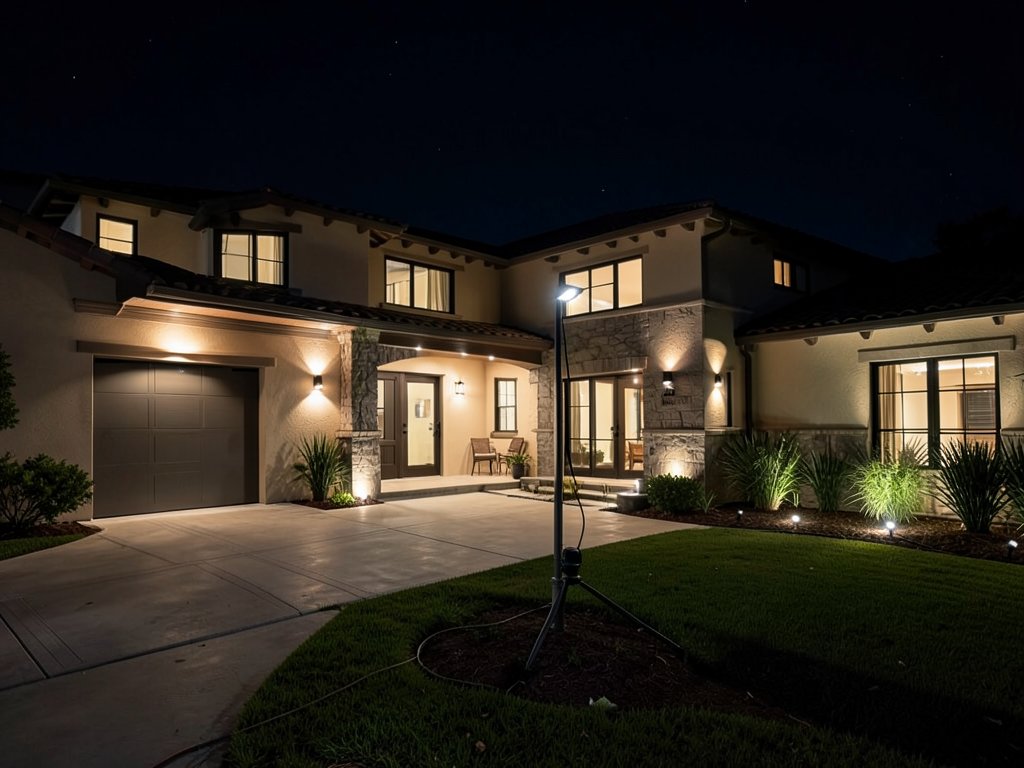
Landscape lighting transforms Porter Ranch estates after sunset. The right system adds safety and curb appeal. But homeowners face a choice: low voltage or line voltage lighting. This guide breaks down both options for Los Angeles properties.
Understanding Your Voltage Options
Voltage determines how much electricity flows through your lights. Low voltage systems use 12 volts. Line voltage systems use 120 volts. That difference changes everything from installation to long-term costs.
Low Voltage Landscape Lighting Explained
Low voltage lighting starts with a transformer. The transformer plugs into a standard outlet and steps down 120V power to 12V. This creates a safe system where you can touch bare wires without shock risk.
Most low voltage systems use LED fixtures. These draw minimal power while producing bright light. A typical 12V LED spotlight uses 3-7 watts compared to 50-100 watts for older halogen bulbs.
The system works by running low-voltage cable from the transformer to each fixture. You can bury this cable just 6 inches deep. The shallow burial makes future landscaping changes easier.
Low voltage systems excel at accent lighting. They highlight trees, architectural features, and garden paths. The soft glow creates ambiance without harsh shadows.
Line Voltage Landscape Lighting Explained
Line voltage lighting connects directly to your home’s 120V electrical system. These fixtures look like regular indoor lights but with weatherproof housings. They produce intense illumination for security and task lighting. Electrical Inglewood.
Installation requires deeper trenching. Code mandates burying line voltage cable 18-24 inches deep. This protects the wires from shovels and other tools.
Line voltage fixtures cost less upfront. You can buy standard floodlights and mount them on existing junction boxes. No transformer needed.
However, these systems carry serious shock hazards. A damaged wire can deliver dangerous current. Professional installation becomes mandatory for safety.
Line voltage works best for large-area lighting. Security floodlights, driveway illumination, and sports court lighting all benefit from high-intensity output.
Direct Comparison: Cost, Safety, and Performance
Both systems have distinct advantages. Your property needs determine the best choice.
Initial Installation Costs
Low voltage systems cost more to install. A typical Porter Ranch estate needs 15-25 fixtures. Professional installation runs $150-300 per fixture including wiring and transformer. Safely Wiring Your New Pool or Hot Tub in Encino.
Line voltage installation costs less per fixture. Basic floodlights install for $75-150 each. However, you need more fixtures to achieve the same coverage area.
Transformer costs add $200-500 to low voltage systems. But this one-time expense powers all your fixtures.
Here’s a cost comparison for a 2,500 square foot front yard:
| System Type | Fixtures | Installation Cost | Transformer/Controls |
|---|---|---|---|
| Low Voltage | 20 LED | $4,000-6,000 | $300-500 |
| Line Voltage | 30 Flood | $2,250-4,500 | $0 |
Operating Costs Over Time
Low voltage LED systems use 80% less electricity. Twenty 5-watt LED fixtures consume 100 watts total. The same coverage with line voltage floodlights uses 3,000-6,000 watts.
Monthly electricity costs tell the story. LED systems add $5-15 to your bill. Line voltage systems add $30-100 depending on usage patterns.
Bulb replacement frequency differs dramatically. LED fixtures last 25,000-50,000 hours. That’s 15-25 years of typical use. Line voltage halogen bulbs fail every 2,000-4,000 hours.
Maintenance costs favor low voltage systems. No bulb replacements for decades. Simple cleaning keeps fixtures working. Line voltage systems need regular bulb changes and fixture inspections.
Safety Considerations
Low voltage systems eliminate shock hazards. Children and pets can safely explore illuminated areas. Gardeners can work without fear of buried cables.
Line voltage systems require GFCI protection on all outdoor circuits. Even with protection, damaged wires pose risks. Tree roots, animals, and landscaping tools can expose live wires.
Insurance companies view low voltage systems favorably. The reduced liability appeals to underwriters. Some policies offer discounts for low voltage installations.
Fire risk differs between systems. Low voltage LED fixtures produce minimal heat. Line voltage halogen bulbs reach 300-500 degrees Fahrenheit. Mulch and dry vegetation near fixtures create fire hazards.
Flexibility and Future Changes
Low voltage systems adapt easily. Moving a fixture requires disconnecting and reconnecting low-voltage cable. No junction boxes or conduit needed.
Line voltage changes demand more work. Moving a fixture means new conduit, junction boxes, and potentially new circuits. Each change requires a permit and inspection.
Low voltage transformers include timers and dimmers. You control brightness and timing from one central location. Line voltage systems need separate controls for each circuit.
Smart home integration works better with low voltage. Many systems connect to Wi-Fi and phone apps. You adjust lighting from anywhere.
Los Angeles Specific Considerations
Porter Ranch properties face unique challenges. Understanding local requirements prevents costly mistakes.
California Title 24 Compliance
California Title 24 regulates outdoor lighting. The energy code limits wattage and requires specific controls. Low voltage LED systems comply automatically. California Title 24.
Title 24 mandates that landscape lights turn off during daylight hours. Photocells or timers satisfy this requirement. Low voltage systems include these controls standard.
The code restricts light trespass onto neighboring properties. Shielded fixtures prevent light pollution. Most low voltage fixtures include proper shielding.
Energy efficiency standards favor LED technology. Title 24 sets minimum lumens per watt requirements. Low voltage LED systems exceed these standards easily.
Coastal Weather Effects
Porter Ranch sits inland from coastal influences. However, Santa Ana winds carry salt particles. These corrode metal fixtures over time.
Low voltage fixtures use marine-grade materials in coastal areas. Brass and copper resist corrosion better than aluminum. Powder-coated finishes provide additional protection.
Line voltage fixtures need weatherproof housings. Gaskets and seals prevent moisture intrusion. Salt air degrades these components faster than inland environments.
Temperature fluctuations affect system performance. Porter Ranch experiences hot summers and cool winters. Low voltage LED fixtures handle temperature extremes better than line voltage bulbs.
Soil and Installation Considerations
Porter Ranch soil contains clay and decomposed granite. This soil drains poorly compared to sandy coastal areas. Proper drainage prevents water accumulation around fixtures.
Low voltage cable burial depth matters less in clay soil. The 6-inch depth still provides adequate protection. Line voltage requires the full 18-24 inches due to higher voltage.
Rocky soil complicates trenching. Professional contractors use specialized tools for difficult conditions. Clay soil sticks to tools and slows installation.
Root systems affect both systems. Tree roots can damage shallow-buried low voltage cable. Deep-buried line voltage cable faces similar risks but has more protection.
Which System Fits Your Property?
Property characteristics guide your decision. Consider these factors for Porter Ranch estates.
Property Size and Layout
Large properties benefit from low voltage systems. The ability to place fixtures anywhere without worrying about voltage drop proves valuable. You can light distant garden areas without voltage loss.
Steep slopes and terraced gardens favor low voltage. Running 120V cable up and down slopes requires careful planning. Low voltage cable handles elevation changes easily.
Properties with mature trees need flexible systems. Tree roots make trenching difficult. Low voltage allows surface mounting when trenching proves impossible.
Water features like ponds and pools require low voltage. Code prohibits line voltage near water. Low voltage lighting creates beautiful reflections without shock hazards.
Security Requirements
Security lighting needs high intensity. Line voltage floodlights illuminate large areas effectively. Motion sensors trigger bright lights when movement occurs.
Low voltage systems work for security but require more fixtures. Multiple LED spotlights create overlapping coverage zones. The result looks better but costs more.
Combination approaches work well. Use line voltage for primary security lighting. Add low voltage accent lighting for aesthetics.
Smart security integration favors line voltage. Many security cameras work with standard floodlight fixtures. Integration with alarm systems proves simpler.
Aesthetic Goals
Architectural lighting requires precise control. Low voltage fixtures offer adjustable beam angles and color temperatures. You highlight specific features without spillover.
Modern landscape designs favor low voltage. Clean lines and subtle illumination suit contemporary architecture. LED technology provides design flexibility.
Traditional estates often choose line voltage. Classic floodlights and lanterns fit historical aesthetics. The bright illumination suits formal gardens.
Color rendering affects plant appearance. LED fixtures offer various color temperatures. Warm white (2700K) enhances flower colors. Cool white (4000K) provides crisp, modern looks.
Professional Installation Requirements
Both systems need professional installation in California. However, the complexity differs significantly.
Low Voltage Installation Process
Professional installers start with a site assessment. They evaluate soil conditions, existing landscaping, and lighting goals. The assessment determines fixture placement and cable routing.
Transformer location affects system performance. Installers mount transformers near GFCI outlets. Distance from fixtures impacts voltage drop. Longer runs need larger transformers or heavier wire.
Cable selection depends on run length. Shorter runs use 12-gauge wire. Longer runs need 10-gauge or larger. Proper wire sizing prevents voltage drop and ensures consistent brightness.
Fixture mounting varies by type. Path lights stake directly into soil. Well lights install flush with surfaces. Up lights mount on stakes or hang from structures.
Testing proves critical. Installers check voltage at each fixture. They adjust transformer output for optimal performance. The final walk-through ensures proper aiming and coverage.
Line Voltage Installation Requirements
Line voltage installation demands electrical expertise. Installers must understand conduit requirements, junction box sizing, and GFCI protection. Mistakes create serious hazards. Electrical Compton.
Permit requirements affect scheduling. Los Angeles County requires permits for all line voltage outdoor work. Inspections verify code compliance before final approval.
Conduit selection matters for longevity. PVC conduit protects wires from physical damage. Metal conduit provides better protection but costs more. Choice depends on location and soil conditions.
Weatherproof boxes prevent moisture intrusion. Each fixture needs proper sealing. Gaskets and silicone create watertight connections. Regular maintenance checks ensure continued protection.
Grounding requirements differ from indoor work. Outdoor systems need special grounding electrodes. Lightning protection becomes important for exposed areas.
Making Your Final Decision
Consider these factors when choosing your system:
- Budget for both installation and long-term operation
- Property size and layout complexity
- Security versus aesthetic priorities
- Future landscaping plans
- Smart home integration desires
- Maintenance preferences and capabilities
Most Porter Ranch homeowners choose low voltage systems. The safety, efficiency, and flexibility outweigh higher initial costs. However, specific needs might favor line voltage.
Combination systems offer the best of both worlds. Use line voltage for security and task lighting. Add low voltage for accent and ambient lighting. This approach maximizes benefits while controlling costs.
Professional consultation helps finalize decisions. Experienced contractors evaluate your specific situation. They recommend systems based on your goals and property characteristics.
Quality installation determines system longevity. Choose licensed contractors with landscape lighting experience. Check references and view completed projects before deciding.
Energy rebates might influence your choice. LADWP and Southern California Edison offer incentives for efficient lighting. Low voltage LED systems often qualify for rebates. LADWP outdoor lighting rebates.
Consider future technology integration. Smart lighting controls improve over time. Low voltage systems adapt more easily to new technologies. Your initial choice affects upgrade options.
Maintenance requirements vary by system. Low voltage needs minimal upkeep. Line voltage requires regular bulb changes and fixture inspections. Factor these costs into your decision.
Property value impacts matter. Quality landscape lighting increases curb appeal. Low voltage systems often provide better return on investment due to lower operating costs and enhanced safety.
Local regulations affect installation. Porter Ranch falls under Los Angeles County jurisdiction. County codes may differ from city requirements. Professional installers understand local requirements.
Insurance considerations influence choices. Low voltage systems reduce liability. Some insurers offer premium discounts for safer lighting choices. Check with your insurance provider.
Environmental impact varies by system. Low voltage LED fixtures use fewer resources over their lifetime. The reduced energy consumption and longer lifespan create smaller environmental footprints.
Noise considerations matter for some properties. Line voltage transformers and ballasts can hum. Low voltage systems operate silently. This difference affects installation locations.
Weather resistance requirements vary. Porter Ranch experiences temperature extremes. Both systems need weatherproof components. However, low voltage fixtures often include better sealing.
Future expansion plans affect initial choices. Low voltage systems allow easier additions. You can add fixtures without major rewiring. Line voltage additions require more extensive work.
Color rendering affects plant appearance. LED technology offers various color temperatures. You can enhance garden colors or create specific moods. Line voltage options remain more limited.
Beam control capabilities differ. Low voltage fixtures offer precise beam control. You direct light exactly where needed. Line voltage floodlights provide broader coverage but less precision.
Installation timing affects costs. Summer installation faces higher demand. Winter installation might offer better pricing. However, weather conditions affect outdoor work feasibility.
Contractor availability varies by season. Schedule consultations early for best availability. Quality contractors book weeks or months ahead during peak seasons.
Permit processing times affect schedules. Los Angeles County permits take 1-2 weeks typically. Rush permits cost more but process faster. Factor this into your planning.
Final decisions should balance immediate needs with long-term goals. Consider how your lighting needs might change over five to ten years. Choose systems that accommodate future changes.
Quality matters more than initial cost savings. Cheap fixtures fail quickly in outdoor conditions. Invest in quality components for better long-term value.
Professional design services add value. Lighting designers create plans that maximize impact while minimizing costs. Their expertise prevents common mistakes.
Energy monitoring capabilities vary by system. Smart low voltage systems track energy usage. This data helps optimize operation and identify problems early.
Resale value considerations matter. Quality landscape lighting enhances property appeal. Buyers view well-designed systems as valuable additions.
Neighborhood aesthetics influence choices. Consider how your lighting affects neighbors. Avoid light trespass and glare that disturbs others.
Wildlife considerations matter in some areas. Bright lights affect nocturnal animals. Low voltage systems often provide sufficient illumination without major wildlife disruption.
Maintenance accessibility affects long-term satisfaction. Choose systems you can maintain comfortably. Consider your ability to change bulbs or clean fixtures.
Technology obsolescence affects decisions. LED technology improves rapidly. Choose systems with upgradeable components. Avoid systems that become obsolete quickly.
Local contractor expertise varies. Some specialize in low voltage, others in line voltage. Choose contractors with specific experience in your preferred system.
Budget constraints affect choices. However, consider total cost of ownership rather than just initial price. Low voltage systems often prove more economical long-term.
Timeframe for completion varies by system. Low voltage installation typically takes 1-2 days. Line voltage projects might require 2-4 days due to permitting and inspections.
Disruption to landscaping differs. Low voltage requires minimal trenching. Line voltage trenching disrupts more area. Consider your landscaping tolerance when choosing.
Final thoughts: both systems work well when properly designed and installed. Your specific needs determine the best choice. Professional guidance ensures optimal results. For more information, visit Southern California Edison rebates.
{
“@context”: “https://schema.org”,
“@type”: “BlogPosting”,
“headline”: “Comparing the best low voltage landscape lighting options for Porter Ranch estates”,
“description”: “Discover the best low voltage landscape lighting options for Porter Ranch estates. Compare costs, safety, and performance to make the right choice.”,
“wordCount”: 2409,
“datePublished”: “2026-04-28T13:38:00.000Z”,
“dateModified”: “2026-04-28T13:38:00.000Z”,
“inLanguage”: “en-US”,
“mainEntityOfPage”: {
“@type”: “WebPage”,
“@id”: “https://eliteelectricianslosangeles.com”
},
“publisher”: {
“@type”: “LocalBusiness”,
“name”: “Elite Electricians Los Angeles”,
“url”: “https://eliteelectricianslosangeles.com”
},
“author”: {
“@type”: “Organization”,
“name”: “Elite Electricians Los Angeles”,
“url”: “https://eliteelectricianslosangeles.com”
},
“image”: {
“@type”: “ImageObject”,
“url”: “https://eliteelectricianslosangeles.com/wp-content/uploads/2026/03/comparing-the-best-low-voltage-landscape-lighting-1.png”
}
}
{
“@context”: “https://schema.org”,
“@type”: “Electrician”,
“name”: “Elite Electricians Los Angeles”,
“url”: “https://eliteelectricianslosangeles.com”,
“address”: {
“@type”: “PostalAddress”,
“addressLocality”: “Los Angeles”
},
“areaServed”: {
“@type”: “City”,
“name”: “Los Angeles”
}
}
{
“@context”: “https://schema.org”,
“@type”: “FAQPage”,
“mainEntity”: [
{
“@type”: “Question”,
“name”: “Which System Fits Your Property?”,
“acceptedAnswer”: {
“@type”: “Answer”,
“text”: “Property characteristics guide your decision. Consider these factors for Porter Ranch estates.”
}
}
]
}
{
“@context”: “https://schema.org”,
“@type”: “BreadcrumbList”,
“itemListElement”: [
{
“@type”: “ListItem”,
“position”: 1,
“name”: “Home”,
“item”: “https://eliteelectricianslosangeles.com”
},
{
“@type”: “ListItem”,
“position”: 2,
“name”: “Blog”,
“item”: “https://eliteelectricianslosangeles.com/blog”
},
{
“@type”: “ListItem”,
“position”: 3,
“name”: “Comparing the best low voltage landscape lighting options for Porter Ranch estates”
}
]
}
{
“@context”: “https://schema.org”,
“@type”: “Service”,
“serviceType”: “Electricians”,
“provider”: {
“@type”: “LocalBusiness”,
“name”: “Elite Electricians Los Angeles”,
“url”: “https://eliteelectricianslosangeles.com”
},
“areaServed”: {
“@type”: “City”,
“name”: “Los Angeles”
},
“description”: “Discover the best low voltage landscape lighting options for Porter Ranch estates. Compare costs, safety, and performance to make the right choice.”
}