
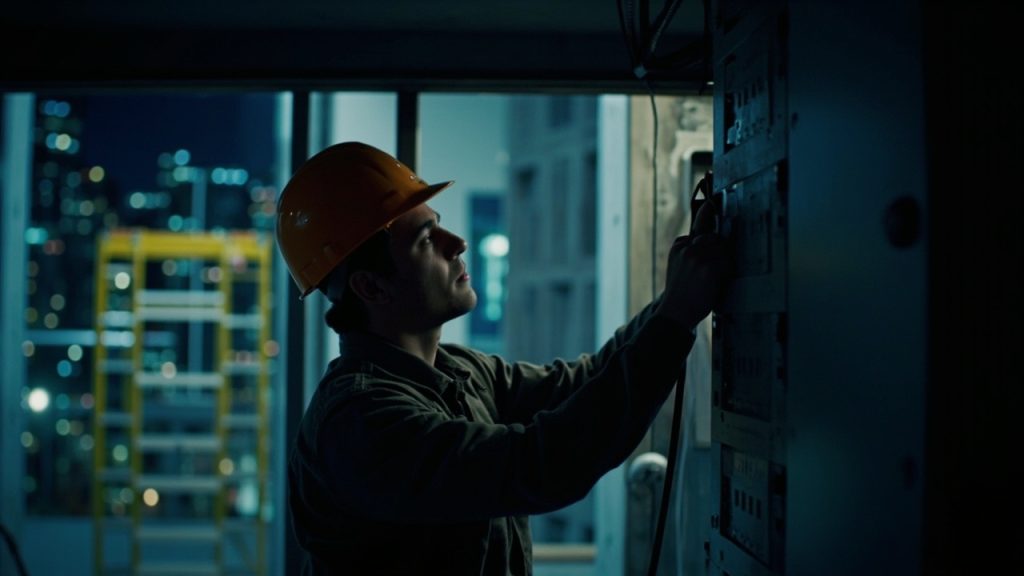
Electrical tenant improvements for new office spaces in Century City
Century City represents one of Los Angeles’ most prestigious business districts with Class A office towers housing law firms, entertainment companies, and financial institutions. When planning electrical tenant improvements for these high-profile spaces, understanding the unique requirements becomes critical. The electrical infrastructure must support modern technology demands while meeting strict building codes and high-rise safety standards. Los Angeles Department of Building and Safety.
Understanding tenant improvement electrical requirements
Tenant improvements in Century City high-rises involve completely new electrical systems tailored to each business’s specific needs. Unlike residential projects, commercial TI work requires extensive coordination with building management, adherence to strict after-hours work policies, and compliance with Title 24 energy efficiency standards. Electrical Inglewood.
Common electrical needs for Century City office tenants include: Electrical Compton.
- Power distribution panels sized for high-density office equipment
- Advanced lighting control systems with daylight harvesting
- Data and communication cabling infrastructure
- Emergency power systems and backup generators
- Specialized circuits for medical equipment or server rooms
Title 24 compliance for Century City commercial spaces
California’s Title 24 Building Energy Efficiency Standards apply to all new construction and renovation projects in Century City. These requirements significantly impact electrical design and installation. The 2022 Title 24 standards mandate specific lighting power density limits, occupancy sensors, and daylight-responsive controls for commercial spaces. California Title 24 Building Energy Efficiency Standards.
For Century City offices, this means:
- LED lighting with integrated controls
- Occupancy sensors in private offices and conference rooms
- Daylight harvesting systems for perimeter spaces
- Automatic receptacle controls for plug loads
Meeting these standards requires careful planning during the design phase. Working with Title 24 certified designers ensures compliance while optimizing energy efficiency. The California Energy Commission provides detailed guidelines for commercial lighting controls and power distribution systems.
High-rise electrical logistics and building coordination
Century City’s high-rise office buildings present unique logistical challenges for electrical contractors. Most towers restrict construction activities to specific hours, typically after 6 PM or on weekends. Freight elevator access must be scheduled weeks in advance, and all materials must be transported through loading docks. Electrical Long Beach.
Key considerations for Century City TI projects:
| Challenge | Solution |
|---|---|
| After-hours work restrictions | Detailed scheduling and overtime coordination |
| Freight elevator logistics | Pre-scheduled material deliveries with backup plans |
| Building management approvals | Early coordination with property managers |
| Noise restrictions | Sound-dampening equipment and quiet work practices |
Successful projects require establishing relationships with building engineers and property management teams. This coordination ensures smooth material deliveries, proper staging areas, and compliance with building-specific requirements.
Power distribution for modern office technology
Today’s Century City offices demand sophisticated power distribution systems. Open floor plans require strategic placement of power poles and floor boxes. Conference rooms need multiple data and power connections. Break rooms require dedicated circuits for appliances.
Essential power distribution components include:
- Main distribution panels with adequate capacity
- Sub-panels for localized power control
- Surge protection devices for sensitive equipment
- Isolated ground circuits for computers and servers
- Emergency lighting and exit signs
Calculating proper load requirements prevents overloading circuits. A typical Century City office space requires 3-5 watts per square foot for general lighting and equipment, plus additional capacity for specialized areas.
Data and low-voltage infrastructure
Modern office spaces require comprehensive data infrastructure beyond basic electrical wiring. Structured cabling systems support voice, data, video, and security applications. Proper planning prevents costly retrofits later. Safely Wiring Your New Pool or Hot Tub in Encino.
Data infrastructure components include:
- Category 6 or 6A data cabling
- Fiber optic backbone connections
- Wireless access point mounting hardware
- Security camera and access control wiring
- Audio-visual system connections
Working with certified low-voltage technicians ensures proper installation and testing. The Telecommunications Industry Association provides standards for structured cabling systems that support current and future technology needs.
Smart office integration and energy management
Century City tenants increasingly request smart office features that integrate with electrical systems. These technologies improve energy efficiency, enhance security, and provide better control over building systems.
Popular smart office features include:
- Occupancy-based lighting and HVAC controls
- Mobile app access for lighting and temperature
- Energy monitoring dashboards
- Automated window shading systems
- EV charging stations for employee parking
Energy management systems can reduce electricity costs by 15-30% through intelligent control of lighting, HVAC, and plug loads. These systems provide real-time monitoring and automated adjustments based on occupancy and usage patterns.
Emergency power and backup systems
Business continuity requires reliable emergency power systems. Century City buildings typically provide emergency power for essential systems, but tenants often need additional backup for critical operations. Installing a backup generator for your Hollywood Hills home before the next outage.
Emergency power options include:
| System Type | Application | Typical Capacity |
|---|---|---|
| UPS (Uninterruptible Power Supply) | Computer servers, phone systems | 1-10 kVA |
| Standby generator | Entire office operations | 20-100+ kVA |
| Battery backup | Emergency lighting, exit signs | 300-1000 VA |
Proper sizing ensures critical systems remain operational during outages. Automatic transfer switches provide seamless power transitions when utility power fails.
Permitting and inspection requirements
All Century City tenant improvements require permits from the Los Angeles Department of Building and Safety. The permitting process includes plan review, inspections, and final approval before occupancy.
Key permitting steps:
- Submit detailed electrical plans for LADBS review
- Obtain building permits before starting work
- Schedule rough-in inspections during construction
- Complete final inspections before occupancy
- Receive certificate of completion
Working with experienced electrical contractors familiar with LADBS processes prevents delays and ensures compliance with all local codes.
Cost factors and project timelines
Electrical tenant improvement costs vary based on project scope, building requirements, and finish specifications. Understanding cost drivers helps with budget planning.
Major cost factors include:
- Square footage and complexity of work
- Existing building conditions and accessibility
- Finish quality and fixture selections
- After-hours work requirements
- Permit fees and plan review costs
Typical timelines for Century City TI projects:
| Phase | Duration | Key Activities |
|---|---|---|
| Planning & Design | 2-4 weeks | Needs assessment, code review, preliminary designs |
| Permitting | 3-6 weeks | Plan submittal, review, revisions, approval |
| Construction | 4-12 weeks | Installation, inspections, testing |
| Finalization | 1-2 weeks | Final inspections, cleanup, documentation |
Selecting the right electrical contractor
Choosing qualified electrical contractors for Century City tenant improvements requires careful evaluation. The right contractor brings experience, proper licensing, and understanding of high-rise commercial work.
Essential qualifications to verify:
- C-10 electrical contractor license in good standing
- Commercial liability insurance and workers’ compensation
- Experience with similar Century City projects
- References from building management companies
- Understanding of Title 24 and LADBS requirements
Request detailed proposals that outline scope, timeline, and cost breakdown. Verify contractor credentials through the California State License Board before signing contracts.
Common challenges and solutions
Century City tenant improvements often encounter unexpected challenges. Being prepared for common issues prevents costly delays and ensures successful project completion.
Frequent challenges include:
- Hidden building conditions discovered during demolition
- Coordination conflicts with other trades
- Material delivery delays
- Code compliance issues during inspections
- Budget overruns from scope changes
Proactive solutions involve thorough initial assessments, detailed contracts with change order procedures, and maintaining contingency budgets for unexpected issues.
Future-proofing your electrical installation
Technology evolves rapidly, making future-proofing essential for Century City office spaces. Designing electrical systems with expansion capabilities prevents costly retrofits as business needs change.
Future-proofing strategies include:
- Installing extra conduit for future cabling needs
- Oversizing main electrical panels for expansion
- Providing dedicated circuits for emerging technologies
- Installing smart building infrastructure
- Planning for EV charging infrastructure
Working with forward-thinking electrical designers ensures your Century City office can adapt to changing technology without major electrical upgrades.
Energy efficiency and sustainability
Century City tenants increasingly prioritize sustainability in their electrical systems. Energy-efficient designs reduce operating costs while supporting corporate environmental goals.
Sustainability features include:
- LED lighting with advanced controls
- Energy monitoring and management systems
- Solar-ready electrical infrastructure
- DC power distribution for certain applications
- Smart power strips and occupancy sensors
Many Century City buildings seek LEED certification, requiring specific electrical design elements. Working with LEED-accredited professionals ensures compliance with green building standards.
Safety considerations for high-rise work
Electrical work in Century City high-rises requires strict safety protocols. Working at heights, in confined spaces, and around active building systems demands specialized training and equipment.
Critical safety measures include:
- Proper personal protective equipment
- Lockout/tagout procedures for building systems
- Fall protection equipment for elevated work
- Fire watch during hot work operations
- Emergency response planning
Experienced electrical contractors maintain comprehensive safety programs and provide ongoing training for their technicians.
Quality assurance and testing
Thorough testing ensures electrical systems function properly before occupancy. Quality assurance processes identify issues early, preventing problems after move-in.
Testing procedures include:
- Circuit continuity and insulation resistance testing
- Ground fault protection verification
- Arc fault circuit breaker testing
- Emergency lighting and exit sign testing
- Power quality analysis
Documentation of all tests provides verification for building management and future maintenance needs.
Maintenance and support after completion
Electrical systems require ongoing maintenance to ensure reliable operation. Establishing maintenance relationships before project completion prevents service gaps.
Maintenance considerations include:
- Regular inspection and testing schedules
- Emergency response availability
- System upgrades and expansions
- Energy monitoring and optimization
- Documentation and as-built drawings
Many electrical contractors offer ongoing maintenance contracts that provide priority service and predictable costs.
Getting started with your Century City TI project
Beginning your electrical tenant improvement project requires careful planning and the right team. Start by defining your needs, establishing budgets, and selecting qualified professionals.
Initial steps include:
- Assessing current and future electrical needs
- Establishing project budget and timeline
- Selecting an experienced electrical contractor
- Coordinating with building management
- Developing detailed electrical plans
Early planning prevents costly changes later and ensures your Century City office space meets all operational requirements.
Frequently Asked Questions
How long does a typical electrical tenant improvement project take in Century City?
Most projects require 6-16 weeks total, including planning, permitting, and construction. Complex installations or buildings with strict after-hours policies may extend timelines.
What are the typical costs for electrical tenant improvements in Century City?
Costs vary widely based on scope and finish quality, typically ranging from $3-12 per square foot for basic improvements to $15-30+ per square foot for high-end installations with advanced technology integration.
Do I need special permits for electrical work in Century City high-rises?
Yes, all electrical work requires LADBS permits. Additionally, most buildings require separate building management approval and coordination for after-hours work and material deliveries.
How can I ensure my electrical system meets Title 24 requirements?
Work with electrical contractors familiar with Title 24 compliance and consider involving Title 24 certified designers early in the planning process to ensure all requirements are met.
What should I look for when selecting an electrical contractor for Century City work?
Verify C-10 licensing, commercial insurance, experience with similar projects, references from building management companies, and understanding of high-rise logistics and local codes.
{
“@context”: “https://schema.org”,
“@type”: “BlogPosting”,
“headline”: “Electrical tenant improvements for new office spaces in Century City”,
“description”: “Expert electrical tenant improvements for Century City office spaces. Learn about Title 24 compliance, high-rise logistics, and smart office integration.”,
“wordCount”: 1770,
“datePublished”: “2026-03-02T15:45:00.000Z”,
“dateModified”: “2026-03-02T15:45:00.000Z”,
“inLanguage”: “en-US”,
“mainEntityOfPage”: {
“@type”: “WebPage”,
“@id”: “https://eliteelectricianslosangeles.com”
},
“publisher”: {
“@type”: “LocalBusiness”,
“name”: “Elite Electricians Los Angeles”,
“url”: “https://eliteelectricianslosangeles.com”
},
“author”: {
“@type”: “Organization”,
“name”: “Elite Electricians Los Angeles”,
“url”: “https://eliteelectricianslosangeles.com”
},
“image”: {
“@type”: “ImageObject”,
“url”: “https://eliteelectricianslosangeles.com/wp-content/uploads/2026/03/electrical-tenant-improvements-for-new-office-spac-1.jpg”
}
}
{
“@context”: “https://schema.org”,
“@type”: “Electrician”,
“name”: “Elite Electricians Los Angeles”,
“url”: “https://eliteelectricianslosangeles.com”,
“address”: {
“@type”: “PostalAddress”,
“addressLocality”: “Los Angeles”
},
“areaServed”: {
“@type”: “City”,
“name”: “Los Angeles”
}
}
{
“@context”: “https://schema.org”,
“@type”: “FAQPage”,
“mainEntity”: [
{
“@type”: “Question”,
“name”: “How long does a typical electrical tenant improvement project take in Century City?”,
“acceptedAnswer”: {
“@type”: “Answer”,
“text”: “Most projects require 6-16 weeks total, including planning, permitting, and construction. Complex installations or buildings with strict after-hours policies may extend timelines.”
}
},
{
“@type”: “Question”,
“name”: “What are the typical costs for electrical tenant improvements in Century City?”,
“acceptedAnswer”: {
“@type”: “Answer”,
“text”: “Costs vary widely based on scope and finish quality, typically ranging from $3-12 per square foot for basic improvements to $15-30+ per square foot for high-end installations with advanced technology integration.”
}
},
{
“@type”: “Question”,
“name”: “Do I need special permits for electrical work in Century City high-rises?”,
“acceptedAnswer”: {
“@type”: “Answer”,
“text”: “Yes, all electrical work requires LADBS permits. Additionally, most buildings require separate building management approval and coordination for after-hours work and material deliveries.”
}
},
{
“@type”: “Question”,
“name”: “How can I ensure my electrical system meets Title 24 requirements?”,
“acceptedAnswer”: {
“@type”: “Answer”,
“text”: “Work with electrical contractors familiar with Title 24 compliance and consider involving Title 24 certified designers early in the planning process to ensure all requirements are met.”
}
},
{
“@type”: “Question”,
“name”: “What should I look for when selecting an electrical contractor for Century City work?”,
“acceptedAnswer”: {
“@type”: “Answer”,
“text”: “Verify C-10 licensing, commercial insurance, experience with similar projects, references from building management companies, and understanding of high-rise logistics and local codes.”
}
}
]
}
{
“@context”: “https://schema.org”,
“@type”: “BreadcrumbList”,
“itemListElement”: [
{
“@type”: “ListItem”,
“position”: 1,
“name”: “Home”,
“item”: “https://eliteelectricianslosangeles.com”
},
{
“@type”: “ListItem”,
“position”: 2,
“name”: “Blog”,
“item”: “https://eliteelectricianslosangeles.com/blog”
},
{
“@type”: “ListItem”,
“position”: 3,
“name”: “Electrical tenant improvements for new office spaces in Century City”
}
]
}
{
“@context”: “https://schema.org”,
“@type”: “Service”,
“serviceType”: “Electricians”,
“provider”: {
“@type”: “LocalBusiness”,
“name”: “Elite Electricians Los Angeles”,
“url”: “https://eliteelectricianslosangeles.com”
},
“areaServed”: {
“@type”: “City”,
“name”: “Los Angeles”
},
“description”: “Expert electrical tenant improvements for Century City office spaces. Learn about Title 24 compliance, high-rise logistics, and smart office integration.”
}