
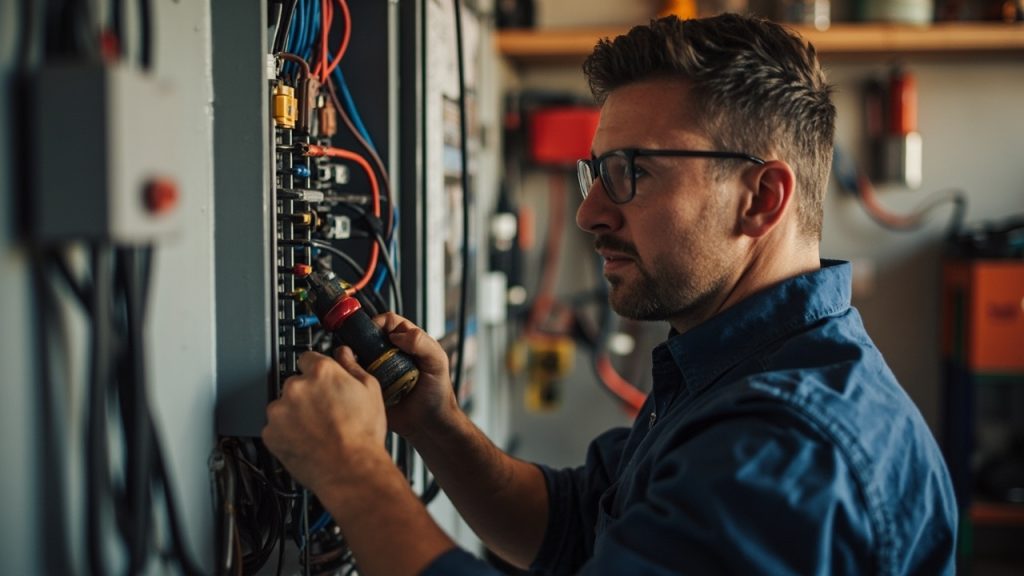
Why Valley Village homeowners need garage subpanels
Valley Village homes built in the 1940s and 1950s often have 100-amp main panels that struggle to handle modern power demands. Adding a garage subpanel gives you dedicated circuits for EV chargers, power tools, and studio equipment without tripping breakers in your main panel.. Read more about Hidden Wiring and Power for Your Sherman Oaks Home Theater System.
Many Valley Village properties feature detached garages or converted workshops where the existing wiring cannot support heavy-duty equipment. A properly sized subpanel eliminates voltage drops and ensures consistent power delivery for your creative or mechanical projects.
EV charger readiness in Valley Village garages
Electric vehicle ownership continues to grow across Los Angeles County. A Level 2 EV charger requires a dedicated 240-volt circuit drawing 30 to 50 amps. Most main panels in older Valley Village homes lack available capacity for this additional load.
Installing a 60-amp subpanel in your garage provides the necessary infrastructure for EV charging while leaving room for future expansion. The subpanel should be mounted near the garage entrance for easy access and include a main breaker for emergency shutoff.
Permit requirements through LADWP and LADBS
Los Angeles Department of Water and Power requires a permit for any new electrical service installation. The process starts with submitting a load calculation worksheet showing your existing and proposed electrical loads.
Los Angeles Department of Building and Safety reviews your plans to ensure compliance with the National Electrical Code and local amendments. For detached garages, trenching requirements specify minimum depths of 18 inches for PVC conduit and 24 inches for direct burial cable.
Valley Village residents benefit from working with electricians familiar with local LADWP service areas and LADBS inspection procedures. The permitting process typically takes 2 to 4 weeks depending on current workloads.
60-amp vs 100-amp subpanel sizing
Choosing the right subpanel size depends on your power needs and future plans. A 60-amp subpanel works well for basic workshop tools and a single EV charger. This size handles most common power tools, lighting circuits, and small appliances.
A 100-amp subpanel provides headroom for multiple EV chargers, large air compressors, or extensive studio lighting systems. The additional capacity costs more upfront but prevents expensive upgrades later.
Consider these factors when selecting subpanel size:
- Number of circuits you plan to install
- Maximum amperage of your largest equipment
- Potential future additions like solar battery systems
- Distance from main panel affecting voltage drop
Feeder wire and conduit requirements
Feeder wire size depends on the subpanel amperage and distance from the main panel. For a 60-amp subpanel within 50 feet, use 6 AWG copper or 4 AWG aluminum wire. Longer runs require larger wire to prevent voltage drop.
Conduit type varies by installation method. PVC Schedule 40 works for underground runs, while EMT (electrical metallic tubing) suits above-ground installations. All exposed conduit must be secured every 10 feet and within 3 feet of termination points.
Grounding requirements include a separate ground rod at the subpanel location and proper bonding of all metallic components. The subpanel requires its own ground bar that connects to the main panel ground system.
Detached garage vs attached garage considerations
Detached garages require underground feeder installation with proper trenching and conduit protection. The trench must maintain proper depth throughout its length and include warning tape 12 inches above the conduit.
Attached garages allow for easier feeder installation through existing walls or ceilings. This reduces labor costs but may require drywall patching and repainting after installation.
Valley Village properties often feature mature landscaping around detached garages. Plan your trench route to avoid large tree roots and underground irrigation systems.
Cost factors for garage subpanel installation
Several factors affect the total installation cost. Distance from main panel significantly impacts labor and materials. A 20-foot run costs much less than a 100-foot underground installation.
Panel amperage selection influences material costs. A 100-amp subpanel requires larger wire, conduit, and breakers than a 60-amp system. Permit fees range from $150 to $300 depending on project scope.
Additional costs may include:
- Wall patching and painting after installation
- Landscape restoration for trenching
- Upgraded main panel capacity if needed
- Specialized equipment mounting brackets
Timeline for garage subpanel projects
Typical garage subpanel installation follows this sequence:
- Initial consultation and load calculation (1-2 days)
- Permit application and approval (2-4 weeks)
- Material procurement and scheduling (1 week)
- Installation and rough-in (1-2 days)
- LADBS inspection and final approval (1-3 days)
The entire process usually takes 3 to 6 weeks from initial consultation to final inspection. Weather delays or LADBS backlogs can extend timelines during busy seasons.
Valley Village specific considerations
Valley Village homes often feature mid-century construction with original electrical systems. These panels may have limited capacity and outdated breakers that fail to meet current safety standards.
The area’s mature trees and landscaping require careful planning for underground conduit runs. Many Valley Village properties have narrow side yards that complicate equipment access.
Local building styles include ranch homes, Spanish revival, and contemporary designs. Each presents unique challenges for exterior conduit routing and panel mounting.
Safety and code compliance
Proper installation ensures your subpanel meets all safety requirements. This includes correct breaker sizing, proper wire termination, and adequate working space around the panel.
All installations must comply with the 2023 National Electrical Code and Los Angeles amendments. This covers everything from breaker spacing to arc fault protection requirements.
Professional installation includes testing all circuits before final inspection. This verifies proper voltage, ground continuity, and breaker operation.
Frequently Asked Questions
Do I need a permit for a garage subpanel in Los Angeles?
Yes. Los Angeles requires permits for all new electrical service installations including garage subpanels. The permit process ensures your installation meets current safety codes and LADWP requirements.
Can my main panel handle a 60-amp subpanel?
This depends on your main panel’s available capacity and existing loads. A qualified electrician performs a load calculation to determine if your main panel can support the additional subpanel. Some older panels may need upgrading first.
How long does garage subpanel installation take?
Actual installation typically takes 1-2 days. However, the complete process including permitting and inspection usually requires 3-6 weeks total.
What size subpanel do I need for an EV charger?
Most Level 2 EV chargers require a dedicated 30-50 amp circuit. A 60-amp subpanel provides adequate capacity for one EV charger plus additional workshop circuits.
Will a subpanel increase my electric bill?
A subpanel itself does not increase electricity usage. It simply provides additional circuit capacity. Your actual power consumption depends on the equipment you connect to the new circuits.
Ready to power your Valley Village workshop?
Adding a garage subpanel transforms your workspace into a fully functional studio or workshop. You gain reliable power for your tools, equipment, and vehicles while ensuring code compliance and safety.
Contact us today for a free consultation and load calculation. We serve Valley Village and surrounding areas with expert electrical installations that meet all Los Angeles requirements.
Call us at 310-800-6848 or visit our website to schedule your appointment. Our team understands Valley Village homes and can recommend the perfect subpanel solution for your needs.
{
“@context”: “https://schema.org”,
“@type”: “BlogPosting”,
“headline”: “Adding a subpanel for your Valley Village garage workshop or art studio”,
“description”: “Need a garage subpanel in Valley Village? Learn about EV charger readiness, LA permit requirements, and proper wiring for your workshop or studio.”,
“wordCount”: 1168,
“datePublished”: “2026-02-28T09:10:00.000Z”,
“dateModified”: “2026-02-28T09:10:00.000Z”,
“inLanguage”: “en-US”,
“mainEntityOfPage”: {
“@type”: “WebPage”,
“@id”: “https://eliteelectricianslosangeles.com”
},
“publisher”: {
“@type”: “LocalBusiness”,
“name”: “Elite Electricians Los Angeles”,
“url”: “https://eliteelectricianslosangeles.com”
},
“author”: {
“@type”: “Organization”,
“name”: “Elite Electricians Los Angeles”,
“url”: “https://eliteelectricianslosangeles.com”
},
“image”: {
“@type”: “ImageObject”,
“url”: “https://eliteelectricianslosangeles.com/wp-content/uploads/2026/03/adding-a-subpanel-for-your-valley-village-garage-w-1.jpg”
}
}
{
“@context”: “https://schema.org”,
“@type”: “Electrician”,
“name”: “Elite Electricians Los Angeles”,
“url”: “https://eliteelectricianslosangeles.com”,
“address”: {
“@type”: “PostalAddress”,
“addressLocality”: “Los Angeles”
},
“areaServed”: {
“@type”: “City”,
“name”: “Los Angeles”
}
}
{
“@context”: “https://schema.org”,
“@type”: “FAQPage”,
“mainEntity”: [
{
“@type”: “Question”,
“name”: “Do I need a permit for a garage subpanel in Los Angeles?”,
“acceptedAnswer”: {
“@type”: “Answer”,
“text”: “Yes. Los Angeles requires permits for all new electrical service installations including garage subpanels. The permit process ensures your installation meets current safety codes and LADWP requirements.”
}
},
{
“@type”: “Question”,
“name”: “Can my main panel handle a 60-amp subpanel?”,
“acceptedAnswer”: {
“@type”: “Answer”,
“text”: “This depends on your main panel’s available capacity and existing loads. A qualified electrician performs a load calculation to determine if your main panel can support the additional subpanel. Some older panels may need upgrading first.”
}
},
{
“@type”: “Question”,
“name”: “How long does garage subpanel installation take?”,
“acceptedAnswer”: {
“@type”: “Answer”,
“text”: “Actual installation typically takes 1-2 days. However, the complete process including permitting and inspection usually requires 3-6 weeks total.”
}
},
{
“@type”: “Question”,
“name”: “What size subpanel do I need for an EV charger?”,
“acceptedAnswer”: {
“@type”: “Answer”,
“text”: “Most Level 2 EV chargers require a dedicated 30-50 amp circuit. A 60-amp subpanel provides adequate capacity for one EV charger plus additional workshop circuits.”
}
},
{
“@type”: “Question”,
“name”: “Will a subpanel increase my electric bill?”,
“acceptedAnswer”: {
“@type”: “Answer”,
“text”: “A subpanel itself does not increase electricity usage. It simply provides additional circuit capacity. Your actual power consumption depends on the equipment you connect to the new circuits.”
}
},
{
“@type”: “Question”,
“name”: “Ready to power your Valley Village workshop?”,
“acceptedAnswer”: {
“@type”: “Answer”,
“text”: “Adding a garage subpanel transforms your workspace into a fully functional studio or workshop. You gain reliable power for your tools, equipment, and vehicles while ensuring code compliance and safety.”
}
}
]
}
{
“@context”: “https://schema.org”,
“@type”: “BreadcrumbList”,
“itemListElement”: [
{
“@type”: “ListItem”,
“position”: 1,
“name”: “Home”,
“item”: “https://eliteelectricianslosangeles.com”
},
{
“@type”: “ListItem”,
“position”: 2,
“name”: “Blog”,
“item”: “https://eliteelectricianslosangeles.com/blog”
},
{
“@type”: “ListItem”,
“position”: 3,
“name”: “Adding a subpanel for your Valley Village garage workshop or art studio”
}
]
}
{
“@context”: “https://schema.org”,
“@type”: “Service”,
“serviceType”: “Electricians”,
“provider”: {
“@type”: “LocalBusiness”,
“name”: “Elite Electricians Los Angeles”,
“url”: “https://eliteelectricianslosangeles.com”
},
“areaServed”: {
“@type”: “City”,
“name”: “Los Angeles”
},
“description”: “Need a garage subpanel in Valley Village? Learn about EV charger readiness, LA permit requirements, and proper wiring for your workshop or studio.”
}